Los Angeles schools are actively addressing the challenge of phone distractions, with Harvard-Westlake School emerging as a notable leader implementing innovative School Phone Bans. They’ve introduced a new policy specifically targeting social media and gaming apps to enhance student engagement. This represents a significant development in current educational news regarding student phone use.
Implementing School Phone Bans with the Opal App
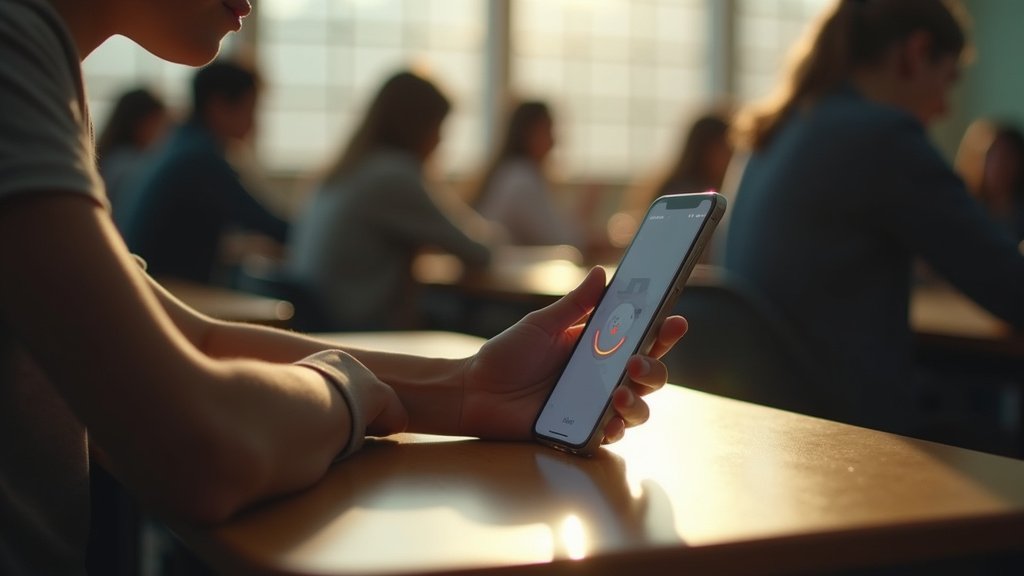
Harvard-Westlake is utilizing a mobile application called Opal to manage student phones during school hours, a key component of their School Phone Bans strategy. This app partially restricts functionality for students in grades 10 through 12. Opal effectively blocks distracting apps such as TikTok, Clash Royale, Instagram, Snapchat, X, Discord, Threads, and Roblox. While students can still reach parents by visiting an administrator’s office, any attempt to circumvent the app’s restrictions triggers an alert to the school’s administrative dashboard. Crucially, Opal does not grant schools visibility into students’ personal screen activity, offering a sophisticated alternative to easily defeated phone pouches or outright School Phone Bans.
Rationale Behind This New School Phone Ban Approach
Educators are increasingly voicing concerns about the detrimental effects of constant cell phone use on student focus, academic performance, and social interaction. Consequently, numerous schools are now enacting limits on student phone use. California public schools, alongside at least 34 other states, have implemented phone bans. The Los Angeles Unified School District (LAUSD) has also voted to ban cellphones, reflecting a growing national trend towards more restrictive campus phone policy. Harvard-Westlake, however, has opted for a nuanced approach to School Phone Bans, seeking a more advanced solution than a complete prohibition. By allowing students to retain their devices while controlling access to certain apps, Opal fosters digital self-regulation. Kenneth Schlenker, Opal’s CEO, advocates for this method, arguing that outright bans fail to equip students with healthy device management skills, potentially leading to problematic usage later. Opal aims to make managing screen time an engaging process, helping students cultivate healthier relationships with their devices.
Shifting Campus Atmosphere with School Phone Bans
Teachers are reporting tangible positive shifts in the campus environment since the implementation of these School Phone Bans. English teacher Jocelyn Medawar has observed an increase in student interactions in the hallways and more direct greetings as students enter classrooms, with fewer faces buried in screens. The overall campus feel has notably changed. Initial student concerns regarding privacy and potential school monitoring of data were addressed through an assembly held by the school council, which subsequently led to a reduction in negative feedback. Many students now express a preference for Opal over lockable phone pouches, finding the method less restrictive and granting them a degree of agency within the School Phone Bans framework.
Broader Los Angeles Context for School Phone Bans
This initiative in Los Angeles aligns with a broader trend toward implementing School Phone Bans. The LAUSD is planning a district-wide ban on student cellphone use during school hours, slated to begin in February 2025. This action is supported by California law AB 3216, which mandates that public schools comply with cellphone usage limits by July 1, 2026. Governor Gavin Newsom signed the bill, aiming to mitigate distractions and address issues such as cyberbullying and mental health challenges. The state’s enforcement of these rules is prompting many districts to develop and implement their own School Phone Bans, all striving to create more focused learning environments and encourage greater student engagement and social development.
Opal’s Philosophy and Impact on School Phone Bans
Opal presents a distinct alternative to traditional School Phone Bans. Designed for educational institutions, the app provides administrators with a data dashboard to monitor policy effectiveness in real time, often at a lower cost and with easier setup than older solutions. Schools distribute instructions and QR codes to students, who then log into the Opal Dashboard. The service includes professional support for parent and student engagement, reinforcing the goal of a calmer classroom and enhanced student focus. Rather than purely punitive measures, Opal incentivizes students through features like leaderboards that encourage reduced screen time and in-app rewards, making time management more enjoyable. Harvard-Westlake’s partnership with Opal serves as a model, demonstrating how schools can empower students with device agency while establishing effective School Phone Bans and fostering focused learning environments.
Looking Ahead: The Evolving Landscape of School Phone Bans
The movement towards managed phone use, including strategic School Phone Bans, is gaining momentum as schools seek a balance between leveraging technology and minimizing distractions. The Opal app offers a promising solution, aiming to cultivate essential digital self-regulation skills crucial for student success. This innovative approach, a significant development in Los Angeles news, has the potential to be adopted by more schools as it provides a middle ground – more sophisticated than a complete ban, yet more effective than simple confiscation. The future of phones in schools is clearly evolving, and this current strategy highlights a forward-thinking method that directly addresses student well-being within the context of School Phone Bans.