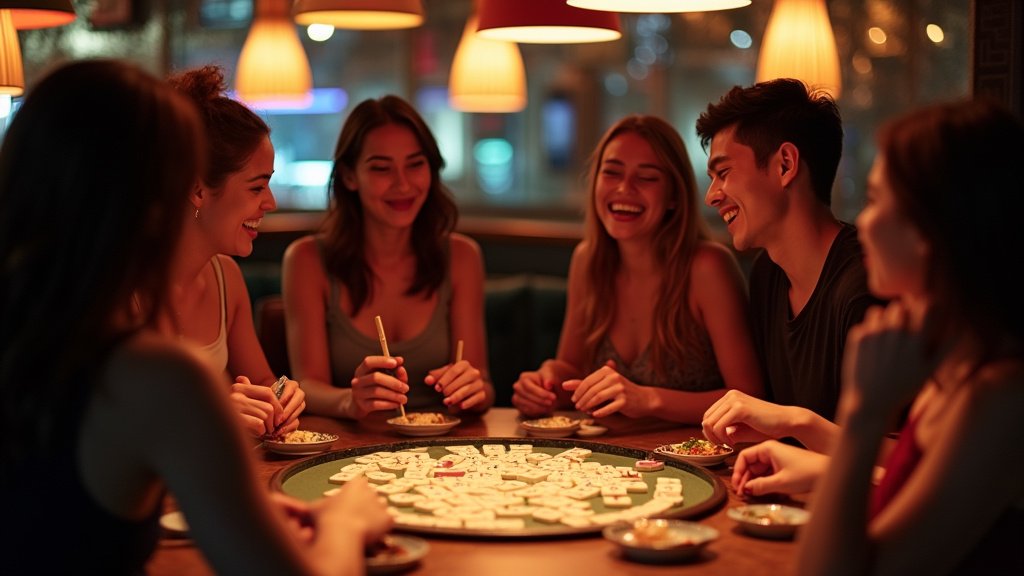
Mahjong, the ancient Chinese tile game traditionally associated with older generations, is experiencing a remarkable resurgence, transforming into a vibrant social phenomenon in California’s trendy bars and restaurants. This isn’t your grandmother’s quiet game night; it’s a full-blown cultural renaissance attracting a new wave of young players eager to connect, socialize, and embrace their heritage.
The Mahjong Renaissance: Beyond the Traditional Table
Once confined to family living rooms and community centers, mahjong is shedding its old-fashioned image and finding new life in the bustling nightlife of cities like San Francisco and Los Angeles. This trend, often dubbed “Grannycore” or a modern take on cultural nostalgia, sees millennials and Gen Z embracing tactile, offline experiences that offer a welcome antidote to the digital saturation of modern life. The game’s appeal lies not only in its strategic depth but also in its inherent social nature, requiring four players to engage in conversation and build camaraderie around the table.
Buzz in Bars and Beyond: The New Social Scene
Organizers like Ryan Lee’s Youth Luck Leisure (YLL) Mahjong Club in San Francisco have been instrumental in this shift. YLL hosts bimonthly parties that often feature up to 30 tables and 200 guests, creating a festive atmosphere complete with live DJs and custom cocktails. Similarly, in Los Angeles, groups such as Mahjong Mistress and East Never Loses are transforming venues into immersive spaces, offering avant-garde scenes for Angelenos looking to reconnect with their roots through this beloved game. These events are designed to be more than just a game; they are community gatherings, providing a unique blend of entertainment, social interaction, and cultural exploration.
Statistics Point to a Surge
The growing popularity of mahjong is quantifiable. Eventbrite reported a staggering 179% increase in mahjong events across the United States between 2023 and 2024. This surge is reflected in the rapid sell-outs and extensive waiting lists for many of these popular mahjong nights. The demand underscores a broader societal shift towards seeking meaningful, in-person experiences. The game’s accessibility, with instructors often on hand to teach novices, further fuels its expansion.
Connecting with Culture and Community
For many Asian Americans, this mahjong revival offers a powerful way to connect with their heritage and bridge generational gaps. It serves as a tangible link to family traditions and cultural identity that might have been less emphasized in previous generations. Beyond its cultural significance, mahjong is proving to be a universal connector. In an era marked by increased digital isolation and a desire for authentic human interaction, particularly in the aftermath of the COVID-19 pandemic, the game offers a unique opportunity for people from diverse backgrounds to meet, converse, and bond over a shared activity. This inclusive appeal has drawn in non-Asian participants as well, who are intrigued by the game’s rich history and its capacity for fostering community.
California’s Hotspots: Los Angeles and Beyond
While San Francisco has been a pioneering hub, the trend is undeniably taking root across California, with Los Angeles emerging as a significant focal point. Venues across the city are hosting mahjong nights, transforming traditional dining and drinking establishments into vibrant hubs for the game. Reports indicate that YLL Mahjong Club also has pop-up events in Los Angeles, and other cities are seeing similar gatherings, signaling a widespread embrace of this revitalized pastime.
The Future of the Tile Game
Mahjong’s current trajectory suggests it’s more than just a fleeting trend; it’s a significant cultural movement. The game’s ability to blend strategy, social connection, and cultural heritage makes it a compelling draw for a generation seeking authentic experiences. As these mahjong nights continue to pack bars and restaurants across California, it’s clear that this centuries-old game has found a vibrant new chapter, proving that sometimes, the most rewarding connections are made one tile at a time.