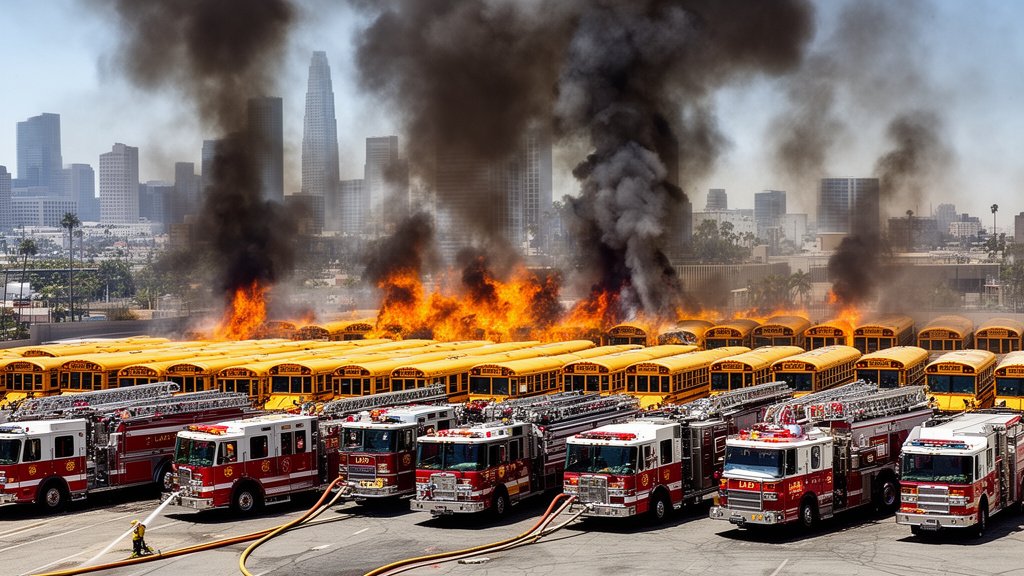
A catastrophic fire erupted at an LAUSD parking facility in downtown Los Angeles, engulfing multiple school buses and triggering a massive emergency response from local fire crews. The incident, which occurred at a primary transit hub for the district, has raised significant concerns regarding the safety of fleet storage and the immediate continuity of transportation services for the Los Angeles Unified School District. As black plumes of smoke billowed over the city skyline, the Los Angeles Fire Department (LAFD) worked aggressively to contain the blaze, preventing the fire from spreading to neighboring commercial infrastructure.
Key Highlights
- Immediate Response: LAFD units arrived on the scene within minutes to combat the multi-alarm fire that broke out at an LAUSD-utilized bus storage facility.
- Asset Loss: A significant number of school buses were confirmed damaged or destroyed by the flames, necessitating a rapid assessment of the district’s remaining transit capacity.
- Operational Impact: The district is currently evaluating the logistical fallout, which may affect scheduled bus routes and student commute times in the coming days.
- Ongoing Investigation: Fire investigators are actively working to determine the origin of the blaze, analyzing site surveillance and environmental factors at the downtown location.
Operational Crisis: Investigating the Impact of the Downtown Fleet Blaze
Containment and Emergency Response
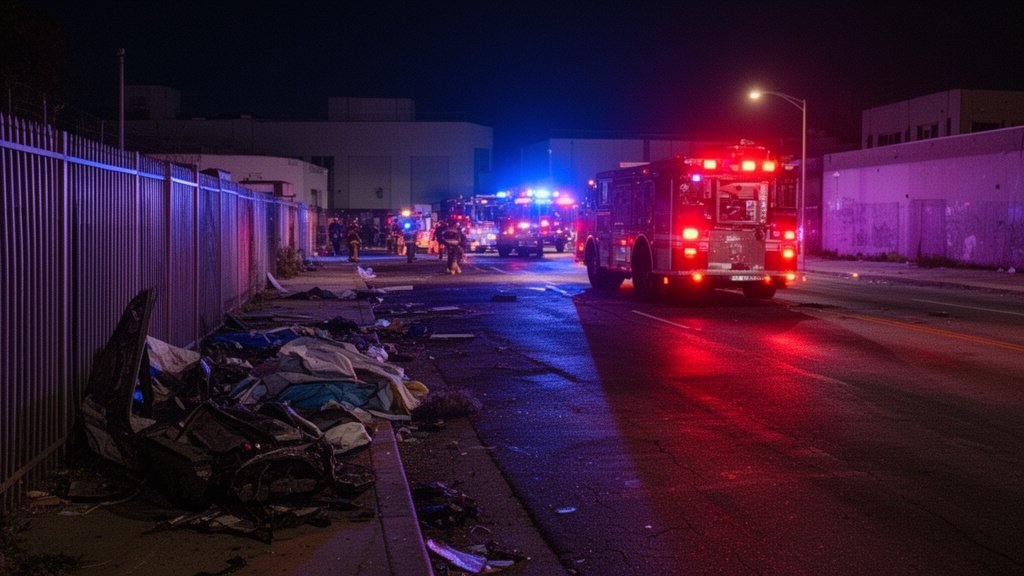
The intensity of the fire, which broke out in a dense area of downtown Los Angeles, required a coordinated multi-agency response. The Los Angeles Fire Department (LAFD) deployed multiple engines and hazardous materials units to address the rapid spread of the fire across the bus yard. Because school buses typically carry fuel reserves and utilize various synthetic materials in their interior construction, the fire presented unique challenges for suppression. The heat generated by the burning vehicles was intense enough to pose a risk to nearby buildings, leading to temporary evacuations and the closure of surrounding streets during peak hours. Firefighters focused their efforts on creating a defensive perimeter, prioritizing the containment of the blaze to prevent it from jumping to adjacent industrial buildings or parked equipment. The scene was characterized by the sound of sirens, the sight of thick, dark smoke, and the coordinated efforts of ground crews working under pressure to mitigate the environmental impact of the burning hydrocarbons.
Infrastructure Vulnerability in Urban Logistics
This event highlights the inherent risks of maintaining large-scale transportation infrastructure in high-density urban environments. For a district as expansive as the Los Angeles Unified School District, the centralized storage of a bus fleet is an economic necessity, yet it represents a single point of failure. The downtown Los Angeles location, while strategic for its proximity to major transit arteries and the 10 Freeway corridor, places critical assets in a concentrated zone. When a fire of this magnitude occurs, it does not merely destroy property; it disrupts the complex scheduling software and human resource allocation that manages thousands of student commutes daily. The vulnerability of such facilities is a growing concern for municipal planners. Unlike commercial transit fleets, which often feature decentralized storage, school districts are historically tethered to specific, fixed-location parking lots due to zoning and land use agreements. The destruction of these vehicles forces an immediate pivot to contingency plans, testing the district’s ability to reroute other vehicles or rely on third-party contractors to cover the service gaps, further complicating an already complex administrative landscape.
The Road to Replacement: Budget and Commute Consequences
The economic aftermath of this incident will be significant. Replacing a fleet of specialized school buses is a multi-million dollar undertaking that goes beyond the purchase price of the vehicles. Each bus must be compliant with strict state and federal safety regulations, equipped with specific security features, and often, increasingly, retrofitted for zero-emission mandates. As the district moves past the immediate emergency phase, the focus will shift to insurance claims, liability assessments, and the procurement of replacement stock. Procurement processes for public school districts are notoriously slow, governed by competitive bidding and public transparency laws that can delay the acquisition of new units for months. Furthermore, the district must now account for the potential shortage in their daily bus rotation. Parents and students who rely on consistent, reliable transportation are facing a period of uncertainty. The district administration faces the challenge of communicating these temporary disruptions clearly, managing the anxiety of families, and ensuring that any adjustments to school bus routes do not lead to prolonged delays in student arrival times at local schools. This incident serves as a stark reminder of the fragile balance between urban infrastructure and public service stability.
FAQ: People Also Ask
Q: Were there any injuries reported during the LAUSD bus fire?
A: While the LAFD responded with urgency, no injuries were reported among staff or emergency personnel at the time of the incident, as the facility was not at full capacity during the peak of the fire.
Q: What caused the fire at the downtown LAUSD facility?
A: The exact cause remains under investigation. LAFD arson investigators are currently processing the scene to rule out mechanical failure, electrical issues, or external factors.
Q: Will this fire impact student transportation services?
A: The district has indicated that they are working to mitigate service disruptions. However, depending on the number of buses totaled, families may experience temporary route adjustments or delays as the district shifts assets to cover essential routes.