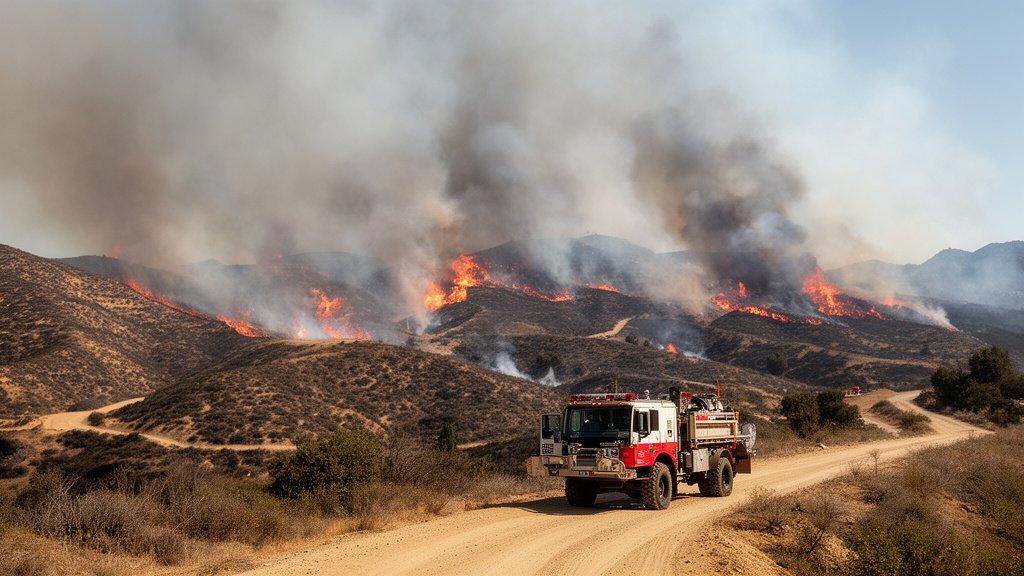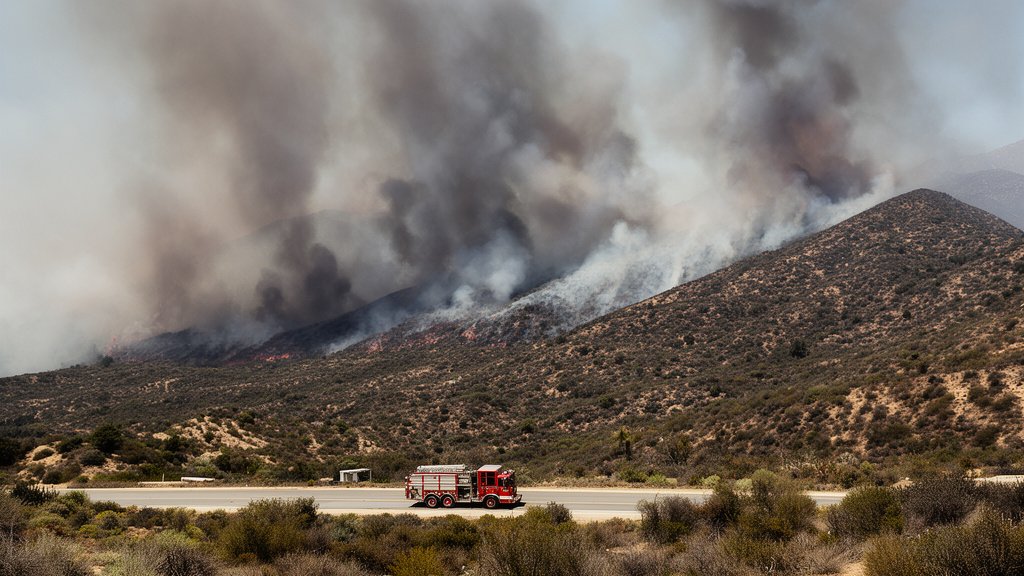
Fast-moving wildfires have erupted across Southern California, fueled by a dangerous combination of historic Santa Ana wind gusts and extremely low humidity, leaving thousands of residents displaced. The Norte Fire, centered in Orange County, has destroyed residential structures and forced the immediate evacuation of 16,000 residents throughout San Juan Capistrano and San Clemente. As fire crews struggle to contain the blaze, additional outbreaks in Malibu have heightened the sense of urgency, putting emergency services on high alert as the region braces for continued oppressive weather conditions.
Key Highlights
- Mass Evacuations: Approximately 16,000 residents in the San Juan Capistrano and San Clemente areas have been ordered to evacuate as the Norte Fire threatens residential zones.
- Meteorological Trigger: The outbreak is driven by powerful Santa Ana winds, which have created critical fire weather conditions, characterized by rapid fire spread and extreme unpredictability.
- Regional Spread: While the Norte Fire remains a primary concern in Orange County, concurrent blazes in Malibu are taxing regional firefighting resources and complicating containment efforts.
- Structural Damage: Confirmed reports indicate that homes have been leveled by the intensity of the flames, signaling a significant economic and personal toll for affected communities.
The Escalating Crisis: Analyzing the SoCal Wildfire Surge
Southern California finds itself once again in the grip of a volatile fire season, with the current surge driven by the convergence of drought-hardened terrain and the seasonal Santa Ana wind patterns. These winds, often referred to as the ‘devil winds,’ have turned what might have been manageable brush fires into high-intensity infernos that outpace traditional suppression methods. The Norte Fire, which has captured the focus of regional emergency management agencies, serves as a stark reminder of the vulnerability of the Wildland-Urban Interface (WUI) throughout the region.
The Anatomy of the Norte Fire
The Norte Fire, now the focal point of the Orange County disaster response, began under conditions that meteorologists categorized as extreme. Within hours of ignition, the combination of gusty winds and dry vegetation allowed the fire to jump containment lines. For residents in San Juan Capistrano and San Clemente, the transition from normalcy to evacuation order happened in mere minutes. The Orange County Fire Authority (OCFA) has been operating at maximum capacity, utilizing both aerial suppression and ground crews to navigate the challenging, hilly topography that defines this section of the county.
Beyond the raw physical destruction of homes, the fire has disrupted essential infrastructure. Power grids in affected areas have faced potential compromise, prompting preventative shutoffs aimed at preventing further ignitions—a common, albeit controversial, strategy in modern California wildfire management. The complexity of this fire is not just in its heat, but in the density of the housing developments it is encroaching upon, which presents a logistical nightmare for emergency responders aiming to protect property while prioritizing human life.
Meteorological Drivers and the Santa Ana Phenomenon
To understand the severity of this event, one must look at the meteorology of the Santa Ana winds. These winds originate in the high-pressure systems of the Great Basin, rushing down through mountain passes and canyons toward the coast. As they descend, the air undergoes adiabatic heating, meaning it becomes significantly hotter and drier. When these winds reach the coastal regions of Southern California, they effectively act as a bellows, turning small brush fires into fast-moving walls of flame.
Furthermore, the region has been experiencing a prolonged period of high temperatures, which has sucked the moisture out of the chaparral and scrub brush. This ‘fuel moisture’ deficit is a critical metric for firefighters; when the vegetation is this dry, it ignites at temperatures much lower than average, allowing fires to travel with incredible speed. The National Weather Service (NWS) has issued multiple Red Flag Warnings, signaling that the risk of new ignitions remains elevated across the entire region, not just in the active fire zones.
Emergency Response and Community Resilience
With 16,000 residents displaced, the burden of managing this crisis falls heavily on local municipalities and community organizations. Evacuation centers have been set up in nearby unaffected zones, providing a refuge for those who have fled their homes. The logistical coordination required to move 16,000 people safely—often under conditions of limited visibility due to smoke—is a monumental task. Local law enforcement, including the Orange County Sheriff’s Department, has been instrumental in managing traffic flow and ensuring that evacuation routes remain open even as fire conditions shift rapidly.
However, the simultaneous outbreak of fires in Malibu highlights the lack of regional redundancy. When fires break out across multiple counties simultaneously, shared resources such as the air tanker fleet and specialized hand crews are stretched thin. This geographic dispersion of risk is the new reality for Southern California, where the ‘fire season’ is no longer a seasonal phenomenon but a year-round operational challenge.
Future Outlook: Living with the Risk
The destruction caused by the Norte Fire and the parallel blazes in Malibu will inevitably reignite debates regarding urban planning and land management in fire-prone zones. As California continues to grow, the expansion of housing into high-risk wildfire areas remains a central tension point. Policy analysts are increasingly pointing toward the need for more robust ‘defensible space’ mandates, stricter building codes that require fire-resistant materials, and more advanced predictive technology to catch fires in their nascent stages.
Furthermore, the economic impact of such events extends well beyond the immediate loss of homes. Insurance premiums in these regions have skyrocketed, leading to a state-wide crisis of coverage that threatens to make living in Southern California prohibitively expensive for many. As the climate continues to change, the frequency and intensity of these events are expected to increase, requiring a paradigm shift in how we build, manage, and protect these communities. The resilience of the residents in San Juan Capistrano, San Clemente, and Malibu is being tested, but as the smoke begins to clear, the focus will undoubtedly shift toward long-term mitigation and the uncomfortable questions regarding the sustainability of current development patterns in the face of an increasingly volatile environment.
FAQ: People Also Ask
Q: What is the current status of the Norte Fire containment?
A: As of the latest reports from the Orange County Fire Authority, crews are working around the clock to establish containment lines, though the extreme wind conditions continue to challenge progress.
Q: Where can evacuees find updated information regarding the wildfires?
A: Residents should monitor official channels from the Orange County Fire Authority, the Malibu Emergency Management office, and local law enforcement social media pages for real-time evacuation orders and shelter locations.
Q: How do Santa Ana winds specifically impact wildfire spread?
A: Santa Ana winds provide the ‘bellows’ effect, pushing dry, hot air over the landscape. This dries out vegetation further and creates extreme fire behavior, causing embers to jump long distances and create new spot fires.
Q: Are there any preventative measures being taken against power line ignitions?
A: Utilities are actively monitoring wind speeds and, in accordance with current wildfire safety protocols, may implement Public Safety Power Shutoffs (PSPS) in designated high-risk areas to minimize the likelihood of fire ignitions linked to electrical infrastructure.