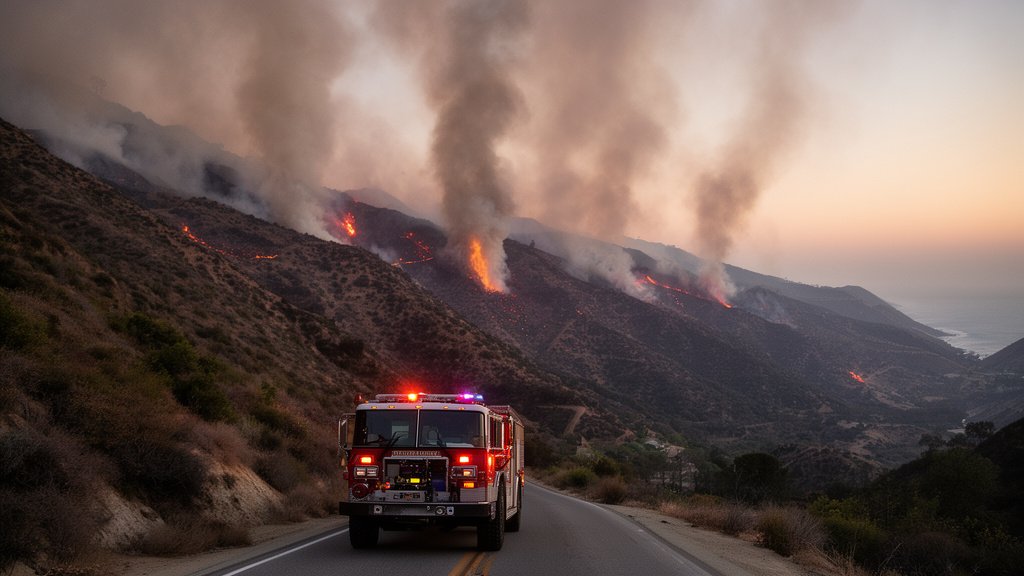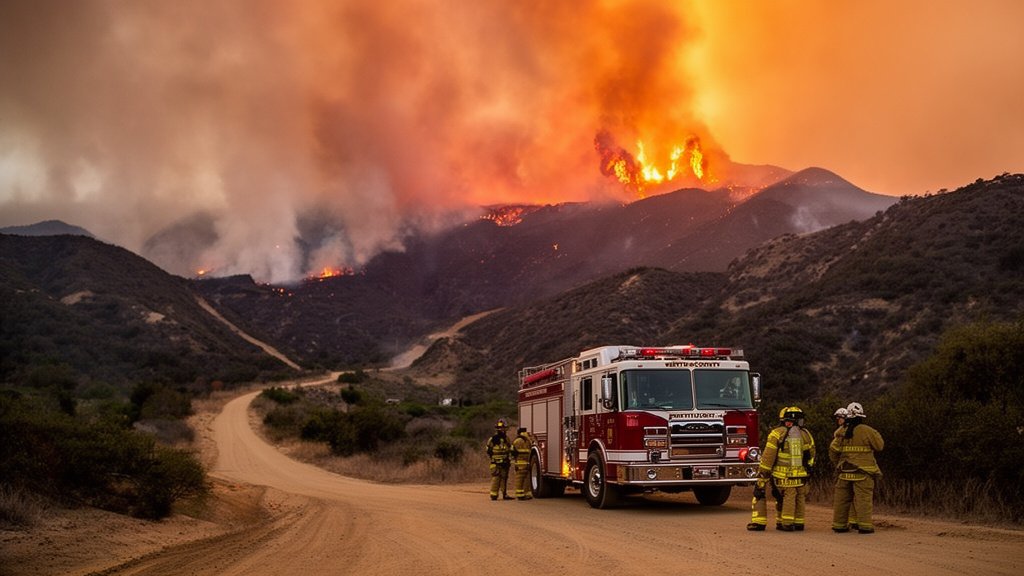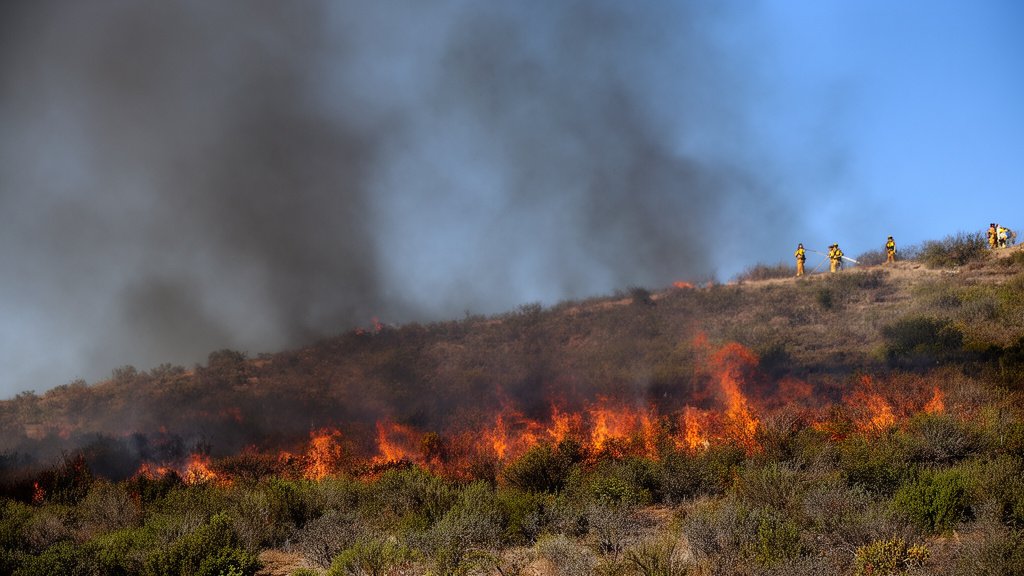
Southern California is currently grappling with an intense wildfire emergency as powerful Santa Ana winds drive the Bryson Fire through the rugged terrain of Malibu, prompting immediate evacuation orders and placing thousands on high alert. The combination of parched vegetation, low humidity, and historic wind gusts—a signature meteorological phenomenon in the region—has created a volatile environment that is testing the limits of emergency response capabilities across Los Angeles and Ventura counties.
The Anatomy of the Bryson Fire Crisis
The Bryson Fire, which ignited late yesterday, has rapidly expanded due to the relentless push of katabatic Santa Ana winds. These winds, descending from the high deserts, are stripping moisture from the landscape and fueling erratic fire behavior. According to the Ventura County Fire Department (VCFD), the blaze has already compromised critical infrastructure and threatened residential clusters within the Wildland-Urban Interface (WUI). Firefighting crews, supported by CAL FIRE aerial units, are contending with wind gusts frequently exceeding 50 mph, which have largely grounded fixed-wing air tankers and forced a heavy reliance on ground-based hand crews and rotary-wing aircraft.
Emergency management officials have issued mandatory evacuation orders for several canyons in the Malibu area. Residents are being advised to utilize established evacuation routes, while temporary shelters have been set up in nearby community centers. The situation remains fluid, with local authorities emphasizing the need for immediate compliance with evacuation orders, as the wind trajectory is shifting unpredictably, potentially endangering previously deemed safe zones.
Meteorological Drivers: The Red Flag Phenomenon
The National Weather Service (NWS) has maintained a Red Flag Warning across a broad swathe of Southern California. This warning is predicated on three critical conditions: extreme wind speeds, critically low humidity levels (often dropping below 10%), and the presence of ‘dead fuel moisture’—dried-out brush and chaparral that acts as high-grade kindling. The Santa Ana winds, caused by high pressure building over the Great Basin, create a pressure gradient that forces air through narrow mountain passes and canyons, accelerating the winds and turning minor ignition points into uncontrollable infernos.
Challenges in the Wildland-Urban Interface (WUI)
The Bryson Fire highlights the ongoing vulnerability of communities located within the WUI. As residential expansion continues into fire-prone coastal and mountainous regions, the complexity of firefighting increases. Protecting homes in these areas requires a massive deployment of resources, often distracting from the ability to establish containment lines in the wildlands. Fire behavior analysts note that the current weather pattern is expected to persist for the next 48 hours, creating a ‘worst-case scenario’ for containment strategies.
Infrastructure and Economic Implications
The economic impact of the Bryson Fire is already beginning to manifest. Major utility providers in the region have initiated Public Safety Power Shutoffs (PSPS) to prevent the electrical grid from becoming a source of ignition during high-wind events. These precautionary measures, while essential for fire prevention, are disrupting local economies, causing significant outages for businesses and schools throughout Los Angeles and Ventura counties. Beyond the immediate destruction, the long-term impact of such fire events includes increased insurance premiums, potential infrastructure damage to power grids, and the necessity for massive investment in fire-resistant landscaping and building materials.
Future Trends and Regional Resilience
The increasing frequency of such events is forcing a re-evaluation of fire management strategies. Experts are pointing to the intersection of climate change and historical drought conditions as a primary driver for the ‘new normal’ of fire seasons in Southern California. The trend indicates that fire seasons are effectively expanding, with winter and spring events becoming just as dangerous as the traditional fall fire season. Consequently, local governments are prioritizing ‘defensible space’ initiatives, where residents are required to clear vegetation surrounding structures to minimize the fire’s reach.
Conclusion: Navigating the Danger
As the Bryson Fire continues to burn, the focus remains on containment and the safety of residents. The collaborative effort between the VCFD, CAL FIRE, and municipal emergency services is the primary line of defense. Citizens are urged to remain vigilant, monitor local news channels for evacuation status updates, and strictly adhere to the guidelines provided by the Los Angeles County Sheriff’s Department and fire officials. The resilience of the Southern California community is being tested once again, underscored by the necessity of preparation in an era where the Santa Ana winds represent a recurring, life-altering threat.
FAQ: People Also Ask
What is a Red Flag Warning and why is it issued?
A Red Flag Warning is issued by the National Weather Service when weather conditions—specifically high wind, low humidity, and dry fuel—are ideal for extreme fire behavior. It serves as an alert that any fire that starts will likely spread rapidly and be difficult to contain.
How can residents prepare for immediate evacuation?
Residents should keep an ’emergency go-bag’ containing essential documents, medications, electronics, and supplies. When evacuation orders are issued, leave immediately, follow marked routes, and do not attempt to ‘defend’ your home unless specifically equipped and trained.
What are Public Safety Power Shutoffs (PSPS)?
PSPS are proactive measures taken by electric utility companies during extreme wind and fire conditions to turn off power to lines that may otherwise spark a fire if damaged by wind or falling debris.
Is the Bryson Fire considered contained?
As of the latest reports, containment is limited due to the severe wind conditions. Firefighters are currently focusing on structural protection and establishing firebreaks where the wind permits.