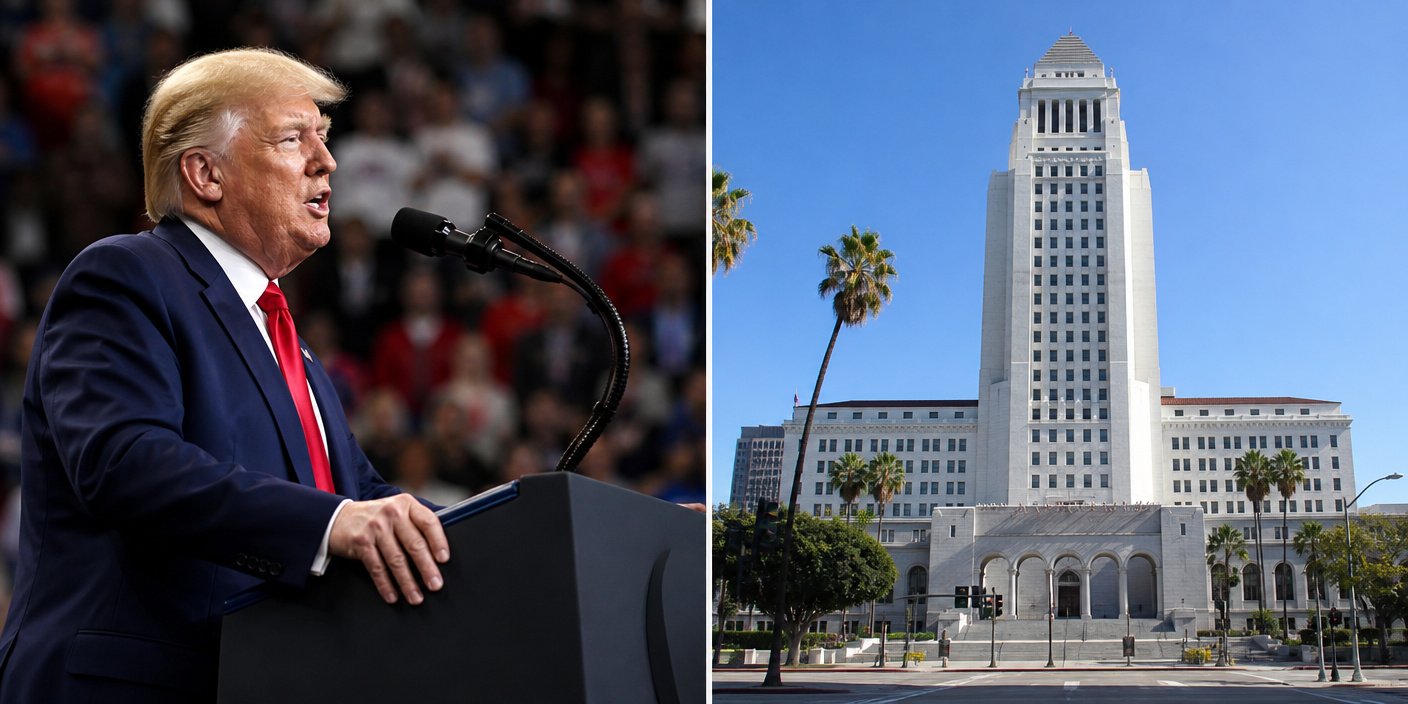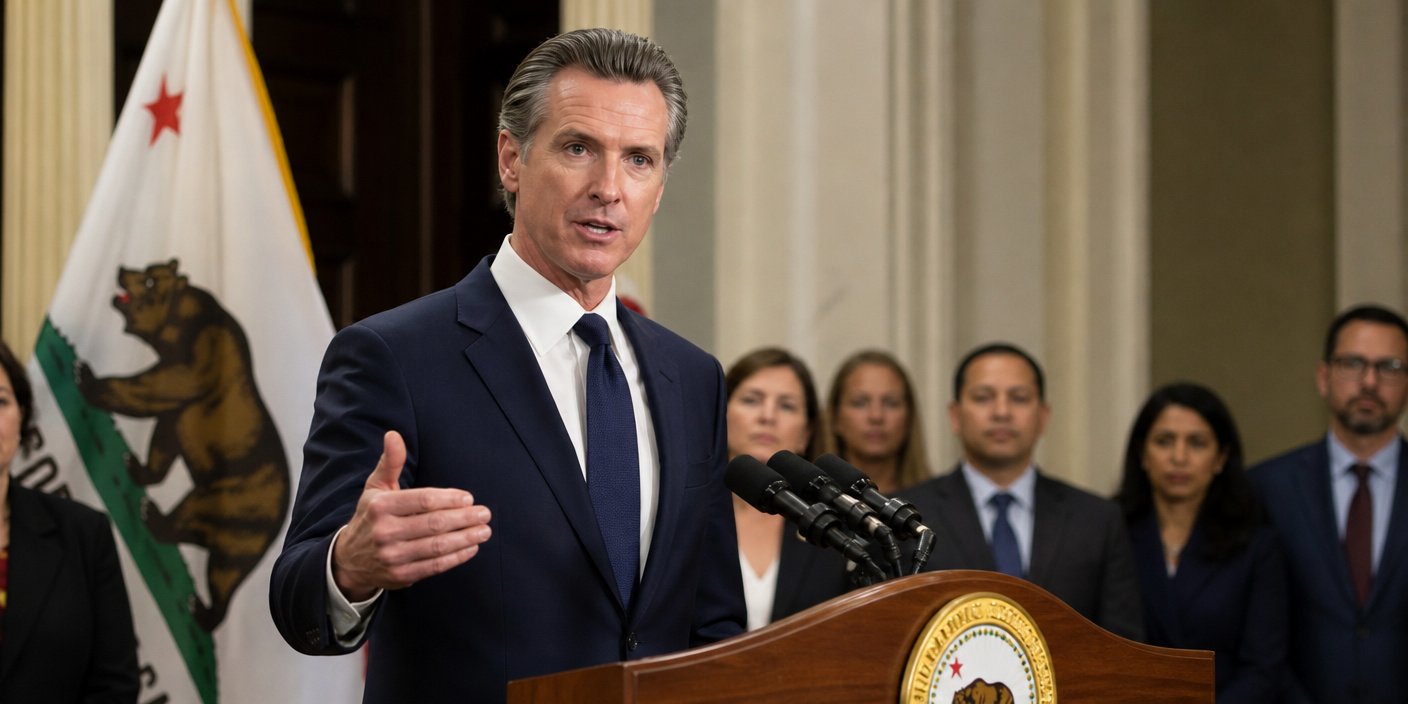
California Governor Gavin Newsom has officially called for a discussion regarding the invocation of the 25th Amendment, escalating a confrontation with the White House following President Trump’s recent remarks. During a televised forum, the President suggested that a hypothetical Iranian military strike targeting Los Angeles and San Diego would be a ‘small price to pay’ for broader strategic objectives. The comments have sent shockwaves through the political establishment, prompting Newsom to argue that the President’s perceived disregard for the lives of millions of Californians constitutes a fundamental lack of fitness for office.
Key Highlights
- Governor Gavin Newsom is formally questioning President Trump’s mental and political fitness following comments regarding a hypothetical Iranian attack on U.S. soil.
- The President referred to potential strikes on Los Angeles and San Diego as a ‘small price to pay,’ a statement that has drawn immediate condemnation from state and federal lawmakers.
- Newsom has invoked the spirit of Section 4 of the 25th Amendment, pushing for a cabinet-level review of the President’s decision-making capabilities.
- The legal and political thresholds for removing a sitting President via the 25th Amendment remain exceptionally high, requiring the support of the Vice President and a majority of the Cabinet.
Constitutional Challenges in the Shadow of Rhetoric
The intersection of national security rhetoric and domestic governance has reached a new, volatile peak. Governor Newsom’s call for the invocation of the 25th Amendment—specifically Section 4, which allows for the removal of a President unable to ‘discharge the powers and duties of his office’—is a stark escalation that highlights deep divisions within the current administration and the broader executive branch.
The Anatomy of the Remark
President Trump’s comments, which framed the security of California’s two largest coastal metropolises as an acceptable casualty in a larger, abstract conflict, have been interpreted by critics as an abdication of the President’s primary oath: to protect and defend the United States against all enemies, foreign and domestic. For Governor Newsom, the issue is not merely the hypothetical nature of the threat but the casual, almost cavalier manner in which the lives of nearly 4 million residents in Los Angeles and 1.3 million in San Diego were treated.
The 25th Amendment: A High Hurdle
Invoking the 25th Amendment is historically unprecedented for a sitting President in this context. Section 4 requires the Vice President and a majority of the principal officers of the executive departments to transmit to the President pro tempore of the Senate and the Speaker of the House a written declaration that the President is unable to discharge the powers and duties of his office.
Legal scholars point out that this process was designed for scenarios of physical or mental incapacity, such as a severe medical crisis or an acute psychological break. Applying it to political speech, no matter how controversial, places it in a gray area. Critics of Newsom’s call argue that using this constitutional tool as a response to rhetoric—rather than clinical incapacity—sets a dangerous precedent that could lead to the weaponization of the amendment against political rivals in future administrations.
Geopolitical and Economic Implications
Beyond the constitutional debate, the rhetoric regarding California has tangible consequences. The state acts as a massive economic engine for the U.S., contributing trillions to the GDP. Suggesting that the state is expendable could impact domestic stability, exacerbate the divide between federal and state governance, and create uncertainty in international markets that look to California’s tech and entertainment sectors as bellwethers for American strength.
Furthermore, this incident highlights a growing disconnect between the federal executive and state-level leadership. If the federal government fails to view the protection of state populations as non-negotiable, the social contract between the federal government and the states begins to fracture. Newsom’s push for the 25th Amendment is, in effect, a signaling mechanism to the electorate and the legislative branch that the safety of the states is under threat from the very office tasked with their defense.
Historical Precedents and Future Predictions
Historically, discussions surrounding the 25th Amendment have been whispered in the corridors of power during times of high tension, but rarely have they been brought to the public fore so aggressively by a state governor. Should this momentum gain traction, we are likely to see a flurry of legal challenges and requests for congressional hearings. Conversely, if the cabinet remains loyal to the President, Newsom’s move may be characterized as a performative political maneuver, ultimately strengthening the President’s base who view such demands as evidence of the ‘establishment’ fighting back against non-traditional leadership. The outcome will likely hinge on whether other cabinet members perceive the President’s comments as a genuine lapse in judgment or merely rhetorical posturing.
FAQ: People Also Ask
What specifically is the 25th Amendment?
The 25th Amendment, ratified in 1967, clarifies the line of presidential succession and, crucially, establishes a procedure for declaring a President ‘unable to discharge the powers and duties of his office.’ Section 4 is the specific clause that deals with the involuntary removal of a President.
Can a state Governor legally force a 25th Amendment action?
No. A Governor does not have the constitutional authority to trigger the 25th Amendment. The mechanism for involuntary removal via Section 4 is reserved exclusively for the Vice President and a majority of the Cabinet. Governor Newsom’s call is a political request intended to pressure those individuals to act.
What did President Trump say about Los Angeles and San Diego?
The President remarked that in the event of an Iranian military strike, the potential loss of California cities like Los Angeles and San Diego would be a ‘small price to pay’ for achieving broader strategic victories, a comment that Newsom and other officials have labeled as reckless and disqualifying.