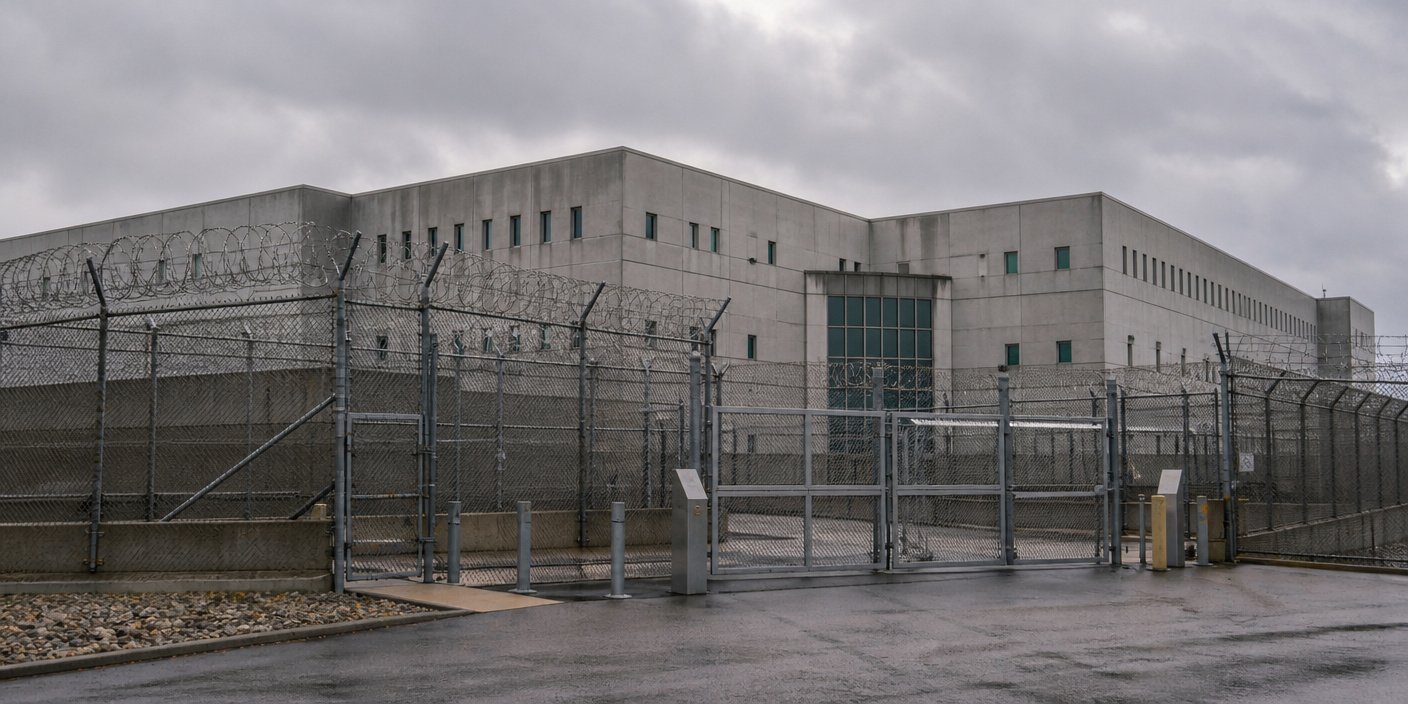
A federal judge has officially authorized the U.S. Marshals Service to utilize ‘reasonable force’ to transport music executive and alleged gang figure Eugene “Big U” Henley Jr. to court. This escalation follows Henley’s refusal to leave his jail cell at the Metropolitan Detention Center to attend a mandatory court proceeding, signaling a breakdown in the standard administrative cooperation between the defense and the federal judiciary.
Key Highlights
- Judicial Authority: The federal judge presiding over the case has granted U.S. Marshals authorization to use necessary physical force to ensure the defendant’s presence in the courtroom.
- The Standoff: Henley reportedly refused to comply with transport orders from his jail cell, prompting the court to shift from voluntary compliance to enforced extraction.
- Procedural Impact: Such orders are rare and indicate the court’s impatience with procedural delays in the high-stakes RICO prosecution involving Henley and others.
- U.S. Marshals Protocol: The U.S. Marshals Service (USMS) has strict guidelines for ‘reasonable force,’ balancing the need for courtroom security with the legal rights of detainees.
The Legal Brink: Compliance and Control in Federal Detention
The administrative machinery of the federal court system relies on the assumption that defendants in custody will appear for scheduled proceedings. When that assumption fails, the judiciary is forced to lean on the enforcement capabilities of the U.S. Marshals Service. The recent authorization by a federal judge regarding Eugene “Big U” Henley Jr.—a prominent figure in the music industry and a defendant in a major RICO case—marks a significant moment in the ongoing trial proceedings.
The Anatomy of the Order
When a judge issues an order for ‘reasonable force,’ it is a clear message that the court’s schedule is not optional. The legal terminology does not imply brutality, but rather the authorization to use whatever physical means are necessary—short of excessive harm—to compel a detainee to stand up, exit their cell, and enter the transport vehicle.
In the context of Henley’s case, his refusal to attend the hearing disrupted the docket of the District Court for the Central District of California. For federal judges, who manage hundreds of cases simultaneously, such delays are not merely inconvenient; they threaten the constitutional right to a speedy trial for all defendants involved, including co-defendants. By authorizing the Marshals, the judge is reasserting the authority of the bench over the defendant’s immediate physical environment.
Understanding the Role of the U.S. Marshals
The U.S. Marshals Service is the primary agency responsible for the transportation of federal prisoners. Their protocols are meticulous. When a prisoner refuses to board a transport vehicle or leave a cell, a specialized team is typically deployed. This process involves a risk assessment—evaluating the prisoner’s history, current mental state, and the potential for violence.
In this scenario, ‘reasonable force’ is defined by the necessity of the situation. The Marshals are trained to use de-escalation techniques first. However, if the defendant remains obstinate, the legal ‘reasonable force’ doctrine allows for physical extraction. This protects the Marshals from liability while ensuring the court’s orders are executed. It is a stark reminder that inside the federal system, the defendant’s agency is almost entirely subordinated to the logistical requirements of the court.
The Stakes of the ‘Rolling 60s’ RICO Case
To understand why such an order would be issued, one must look at the gravity of the case. Henley is a central figure in a sweeping federal RICO (Racketeer Influenced and Corrupt Organizations Act) indictment. These cases are notoriously complex, often involving dozens of co-defendants, thousands of pages of discovery, and high-security concerns.
Federal prosecutors use RICO statutes to dismantle organizations they allege are criminal enterprises. For the defendants, these charges carry potential life sentences. In such an environment, tension is the baseline. When a defendant refuses to attend court, it can be interpreted by the judge as an act of defiance, a delay tactic, or a sign of mental instability—all of which require immediate judicial intervention. The authorization of force is a blunt instrument designed to cut through this friction and get the trial back on track.
Future Legal Implications
The path forward for Henley and the prosecution is now marked by this incident. Every future hearing will likely see heightened security measures. Furthermore, the defense may be forced to address the optics of this standoff. Does this refusal indicate a lack of cooperation with counsel? Does it suggest a protest against the court’s legitimacy?
Whatever the motivation, the result is the same: the defendant has lost the privilege of voluntary attendance. From this point forward, the court’s authority is absolute. Whether this incident impacts potential plea negotiations or creates a narrative of defiance that could hurt the defendant in front of a jury remains to be seen. However, in the immediate term, the judge has sent a clear message: the court will not be stalled.
FAQ: People Also Ask
1. What does ‘reasonable force’ mean in a legal context?
In the context of prisoner transport, ‘reasonable force’ is the amount of force necessary to achieve a legitimate law enforcement objective, such as moving a prisoner to court, without exceeding what is legally permissible. It precludes ‘excessive’ force, which would be punitive or harmful beyond what is needed for compliance.
2. Can a defendant refuse to attend their own court hearing?
Generally, no. A defendant has a constitutional right to be present at their trial, but they do not have the right to refuse to attend. If a defendant refuses, the court can compel their attendance or, in some cases, proceed without them if they have voluntarily waived their right to be present through disruptive behavior.
3. Why are U.S. Marshals the ones executing this order?
The U.S. Marshals Service is the federal agency tasked with the custody, housing, and transportation of federal detainees. They are the only federal law enforcement entity authorized to manage the transport of individuals from detention centers to federal courtrooms.
4. Does this order affect the outcome of the trial?
Directly, no. It is an administrative and security order. However, it can affect the ‘optics’ of the trial. A judge’s perception of a defendant’s behavior can influence rulings on bail, release, and sentencing, though the jury is typically shielded from these procedural skirmishes.