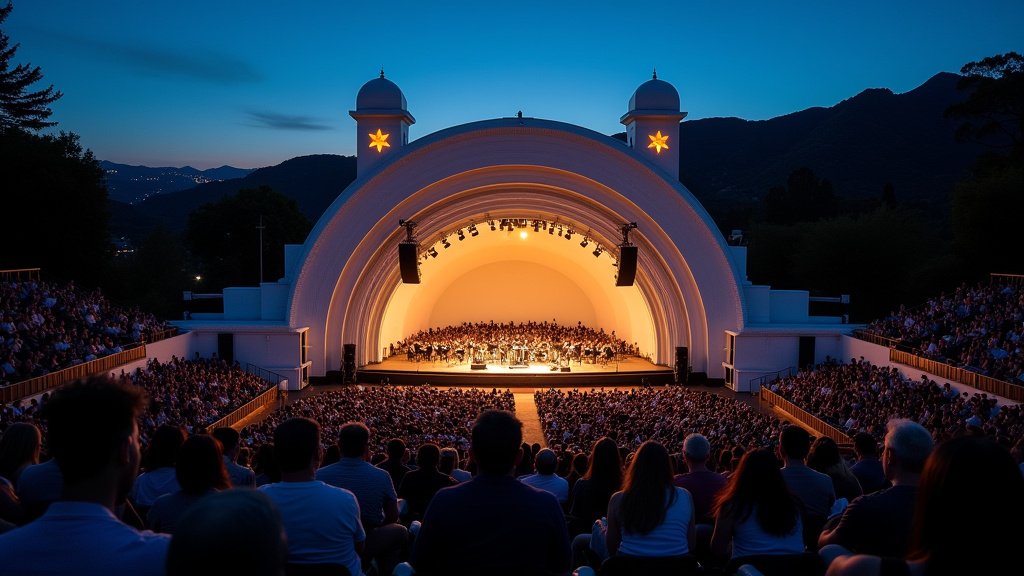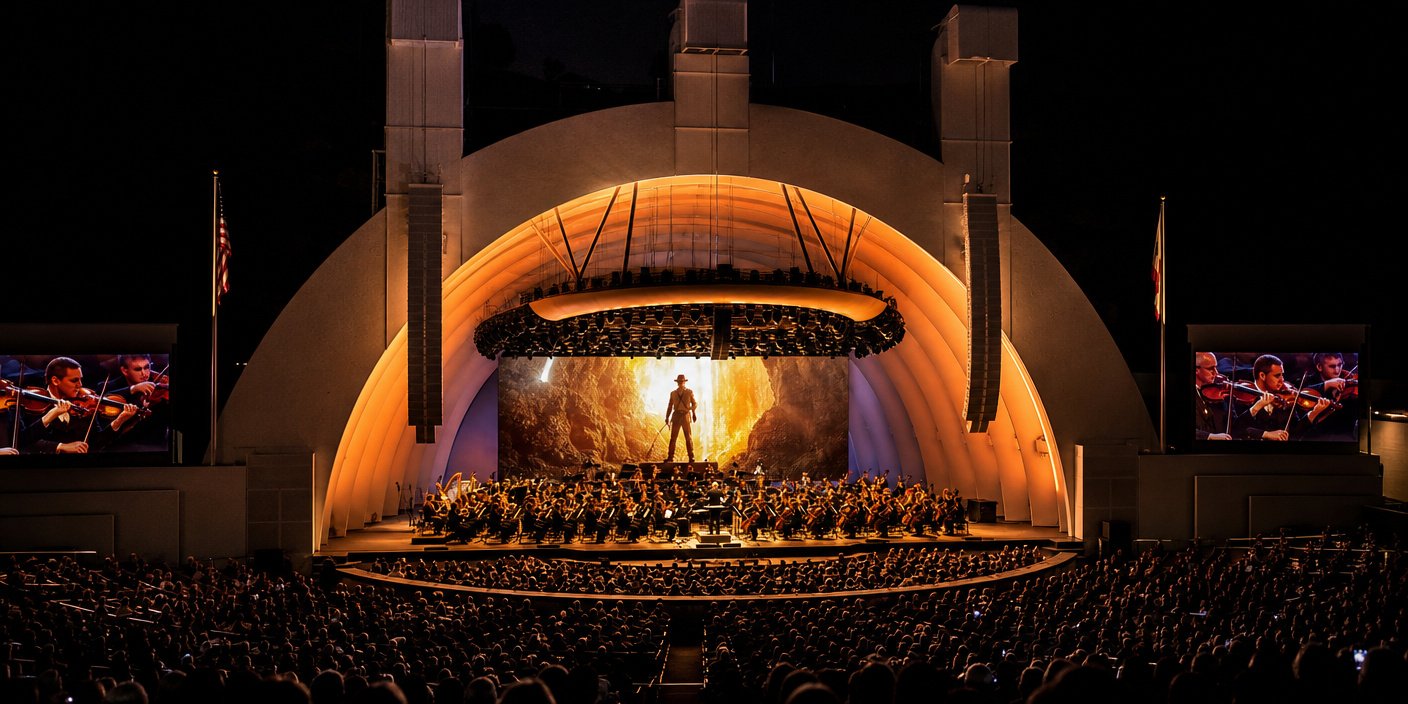
The Hollywood Bowl serves as the ultimate stage for ‘Maestro of the Movies,’ a breathtaking musical tribute to the legendary composer John Williams. As night falls over the iconic white shell in the Hollywood Hills, the Los Angeles Philharmonic delivers a performance that transcends a typical concert, transforming the amphitheater into a living archive of cinema’s most evocative moments. From the thunderous opening fanfare of Star Wars to the wonder-filled melodies of Jurassic Park, this event highlights how Williams’ compositions have not only defined the cinematic experience but have become a central pillar of modern musical culture.
The Sonic Architecture of the Hollywood Bowl
There is no venue in the world quite like the Hollywood Bowl for experiencing John Williams’ music. The natural acoustics of the Hollywood Hills provide a unique, expansive soundstage that mirrors the epic scale of Williams’ orchestrations. Unlike a traditional concert hall, the Bowl offers an immersive, open-air environment that heightens the communal experience. When the orchestra strikes the first chord of a familiar theme, the ambient sounds of the city merge with the music, creating a tangible connection between the audience, the film history on screen, and the live performers on stage.
For many attendees, this tribute is an annual pilgrimage. It is a rare opportunity to hear complex, cinematic scores performed with the same intensity and precision required by a symphony, yet presented with the accessibility of a pop-culture celebration. The interplay between the massive projection screens, which display iconic film clips, and the live orchestra creates a ‘live-to-picture’ synchronization that requires impeccable timing—a testament to the skill of the conductors and the LA Phil musicians who have mastered this delicate balance.
Unpacking the Setlist: From Tatooine to Isla Nublar
The program for ‘Maestro of the Movies’ is meticulously curated to span the vast breadth of Williams’ career. While the hits—Star Wars, Jurassic Park, and Indiana Jones—are the expected cornerstones, the tribute often weaves in the nuanced, emotional depth of his other works, such as the hauntingly beautiful violin solos from Schindler’s List or the sweeping, adventurous themes from E.T. the Extra-Terrestrial.
What makes this setlist particularly compelling is the curation of emotional pacing. The show does not simply bombard the audience with action themes; it oscillates between high-energy brass arrangements and intimate, woodwind-driven sequences. This structural diversity allows the audience to appreciate the technical sophistication of Williams’ writing—his use of leitmotifs (recurrent musical themes for characters or ideas) becomes strikingly clear when heard in a live, chronological format. Listening to these scores live reminds the audience that Williams is not merely a film composer but a symphonic master whose work draws heavily on the romantic traditions of the 19th and 20th centuries.
The Collaborative Force: LA Phil and Cinematic Synchronization
Performing ‘Maestro of the Movies’ presents significant technical challenges. Unlike standard orchestral repertoire, where the conductor dictates the tempo, these performances are often slave to the pacing of the film clips projected behind the orchestra. The LA Phil’s ability to remain perfectly in sync with the visual media, while maintaining the expressive freedom necessary for a live performance, is a feat of engineering and artistry.
Conducting for film requires a specific set of skills, often involving ‘click tracks’ (auditory cues heard in the conductor’s earpiece) to ensure that the music hits every visual mark on the screen with millisecond precision. Yet, in the hands of seasoned conductors who frequent the Bowl, the music never feels robotic. They manage to infuse the strict requirements of film timing with the organic, swelling crescendos that define the Hollywood Bowl experience. This precision ensures that a lightsaber duel or a T-Rex escape feels as immediate to the audience as if they were watching the film for the first time in a crowded theater.
Beyond the Concert: The Cultural Legacy of John Williams
John Williams’ impact on the film industry cannot be overstated. He single-handedly revived the lush, orchestral score in an era when electronic and minimalist music were becoming the industry standard. By examining his body of work through the lens of a live tribute, one gains a clearer understanding of how he shaped the modern blockbuster.
His collaboration with directors like Steven Spielberg and George Lucas created a synergistic relationship where the music became as iconic as the imagery. At the Hollywood Bowl, this legacy is celebrated not as a relic of the past, but as a living, breathing part of modern entertainment. The concert series serves to educate new generations of listeners, many of whom may have grown up with the soundtracks, about the rigors of orchestral composition. It bridges the gap between ‘high art’ classical music and pop culture, proving that the two are not mutually exclusive, but rather deeply intertwined in the fabric of modern American history.
FAQ: People Also Ask
Q: Is ‘Maestro of the Movies’ suitable for young children?
A: Yes, it is widely considered a family-friendly event. Given that many of John Williams’ most famous scores are from beloved adventure and family films, the concert appeals to all ages. However, please check individual showtimes, as some late-evening performances may be better suited for older children.
Q: Do I need to have seen all the movies to enjoy the concert?
A: Absolutely not. While recognizing the music from films like Star Wars or Indiana Jones adds a layer of nostalgia, the musicality and technical brilliance of the score stand on their own. You can appreciate the performance as a masterclass in orchestral storytelling regardless of your familiarity with the source films.
Q: How long is the performance?
A: The concert typically lasts around two to two and a half hours, including an intermission. The timing may vary slightly depending on the specific program length and the number of encores often demanded by the audience.
Q: Are there visual components other than the film clips?
A: The primary visual focus is the high-definition projection of film clips synchronized with the music. The Hollywood Bowl’s large screens ensure that even those in the rear seating areas have a clear view of both the orchestra and the cinematic footage.