Los Angeles County is witnessing a historic industrial pivot, with the regional defense sector experiencing a meteoric rise that has effectively doubled the value of federal contract obligations over the last decade. While historically synonymous with aerospace titans like Northrop Grumman and Boeing, the landscape of Southern California’s defense ecosystem is being rapidly rewritten by a new breed of technology startups. Driven by a massive influx of private venture capital and an aggressive push for technological superiority in autonomous systems, AI, and cybersecurity, the region has solidified its status as the epicenter of the modern ‘Defense Tech’ movement.
Key Highlights
- Contract Value Surge: The cumulative value of defense-related contract obligations in Los Angeles County has more than doubled in the last ten years, driven by a shift toward software-defined warfare.
- The Venture Capital Catalyst: Firms like Andreessen Horowitz and Founders Fund are pouring billions into startups located in El Segundo, Costa Mesa, and downtown Los Angeles, shortening the gap between Silicon Valley innovation and Pentagon procurement.
- Technological Shift: The boom is characterized by a transition from legacy airframe manufacturing to high-tech, scalable solutions, including autonomous drone swarms, satellite communications, and artificial intelligence-driven battlefield management.
- Regional Rebirth: Southern California’s unique concentration of aerospace engineering talent, proximity to Space Force assets, and VC density has created a flywheel effect that traditional defense hubs struggle to match.
The Silicon Beach Defense Pivot: A New Era of Deterrence
The Southern California defense economy was long characterized by slow, multi-year procurement cycles, cost-plus contracts, and massive, government-led manufacturing projects. However, the last decade has seen a structural transformation. The rise of the ‘Defense Tech’ sector—a category distinct from traditional aerospace—has fundamentally altered how military contracts are bid, awarded, and executed. This shift is not merely about more money; it is about a different type of money and a different speed of innovation.
From Cold War Titans to Agile Startups
Historically, Los Angeles was the heart of the aerospace industry, relying on steady state contracts. Today, the geography of defense production is shifting toward innovation clusters in El Segundo and Costa Mesa. Startups such as Anduril Industries have become the face of this change, leveraging private equity to build prototypes rapidly before approaching the Department of Defense. This contrasts sharply with the legacy model of winning a contract and then figuring out how to build the technology.
The economic implication of this shift is profound. When venture capital enters the defense space, it demands speed, scalability, and modularity. This has forced the traditional military industrial base to either adapt or lose market share to agile startups. The local economy is feeling the effects: there is a surge in demand for software engineers, AI researchers, and systems integrators, creating a high-wage tier of employment that was previously absent from the traditional defense manufacturing sector.
The Venture Capital Catalyst
For years, Silicon Valley venture capitalists were wary of the defense sector due to long procurement timelines and regulatory friction. That changed following the rise of global geopolitical volatility and the realization that the Pentagon needed commercial innovation to keep pace with global rivals. LA became the logical base for this convergence.
Entities such as the Defense Innovation Unit (DIU) and local incubators have created a ‘dual-use’ environment. Startups are building technology for both commercial and military applications—satellite imagery, logistics optimization, and AI-based pattern recognition—allowing them to diversify revenue streams while scaling quickly. This financial resilience is one reason why the value of contracts in LA County has doubled; it is no longer reliant solely on a single massive government program, but rather a web of hundreds of interconnected, smaller, high-tech contracts.
The Dual-Use Technology Paradox
One of the most complex secondary angles to this boom is the ethical and operational paradox of ‘dual-use’ technology. By focusing on software that can be used for both civilian logistics and military targeting, companies are navigating a sensitive landscape. However, the economic reality is that this agility is exactly what the U.S. government is paying for.
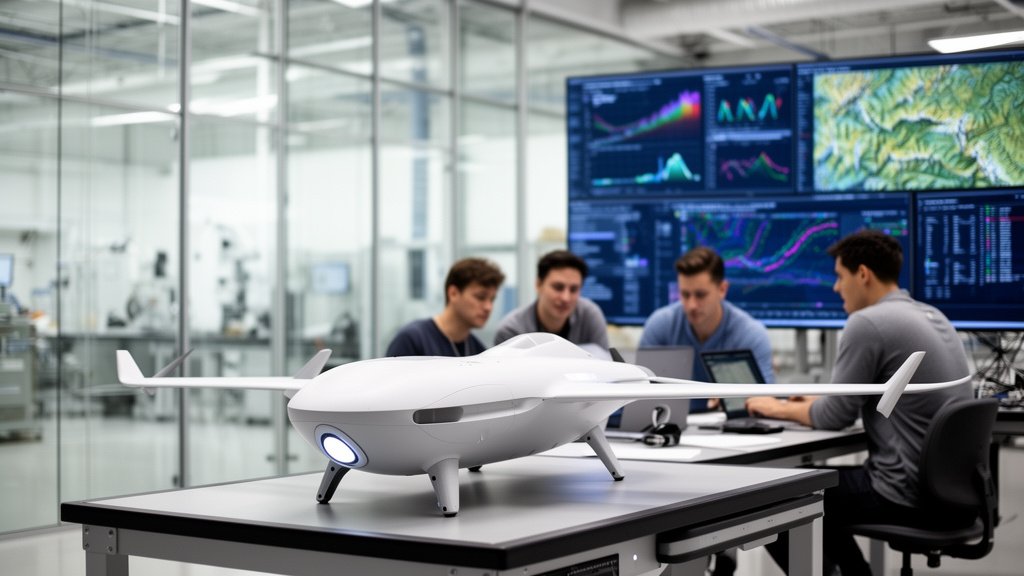
As the military moves toward distributed, low-cost hardware—such as thousands of small, autonomous drones rather than a few massive, expensive platforms—LA’s specialized manufacturing capabilities are in high demand. This shift toward mass-producible, high-tech weaponry is the engine driving the recent financial statistics. The region is leveraging its existing aerospace heritage—thousands of engineers who understand propulsion, materials science, and systems integration—and layering on top of it the coding and AI acumen of Silicon Valley.
Geopolitical Instability as a Growth Engine
Finally, we must consider the external drivers. The increased global demand for defense technology is not occurring in a vacuum. Regional instability and the race for dominance in cyber and space warfare have created a permanent state of high demand. For Los Angeles, this means the ‘weapons boom’ is unlikely to be a transient spike.
The infrastructure built in the last decade—the research facilities, the venture capital networks, the specialized supply chains—creates a moat around the region. It is now significantly more expensive and difficult for a competitor to replicate the ecosystem that exists between El Segundo and the broader SoCal tech corridor. The surge in contract values is essentially the market pricing in the necessity of a modernized, high-tech defense posture, and Southern California is the primary beneficiary of that investment thesis.
FAQ: People Also Ask
Q: What defines ‘Defense Tech’ compared to traditional aerospace?
A: Defense Tech refers to startups that treat military hardware like software, prioritizing rapid iteration, AI integration, and agile manufacturing over the traditional ‘cost-plus’ model of legacy aerospace.
Q: Why has Los Angeles County become the hub for this resurgence?
A: Los Angeles benefits from a unique combination of legacy aerospace engineering talent, proximity to critical Space Force command centers (like LA Space Force Base in El Segundo), and a dense network of venture capital firms willing to bet on high-risk, high-reward technology.
Q: Is this trend sustainable, or is it a bubble?
A: While venture capital markets can fluctuate, the federal government’s pivot toward ‘distributed lethality’ and agile procurement suggests that the demand for the type of tech being produced in SoCal will remain high for the foreseeable future, as it is central to national security strategy.
Q: What impact does this have on the local job market?
A: The boom is creating a high-demand market for specialized roles, including software engineers, robotics experts, and systems integration specialists, effectively raising the wage ceiling in the local tech and engineering sectors.