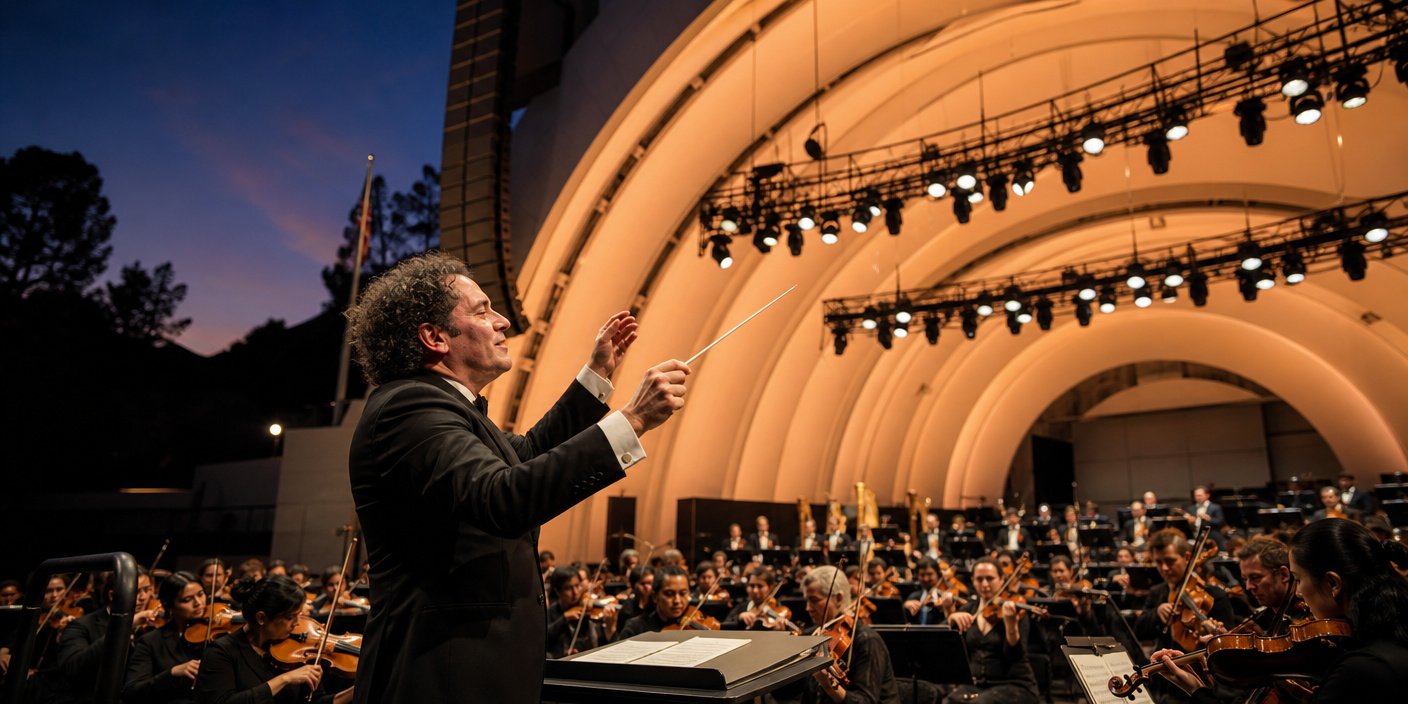
The final week of August in Los Angeles marks the end of an era. As the sun sets on the 2024 summer season, the Hollywood Bowl is currently hosting a series of performances that serve as more than just concerts; they represent the symbolic conclusion of Gustavo Dudamel’s historic 17-year tenure with the Los Angeles Philharmonic. This transition—one of the most significant shifts in American orchestral history—has dominated the local cultural conversation, creating an atmosphere of reflection, gratitude, and high-stakes artistic expression that anchors the city’s activity from August 26 through September 1.
Key Highlights
- Dudamel’s Grand Finale: The Hollywood Bowl is the stage for the culmination of Gustavo Dudamel’s 17-year residency, featuring high-profile guest performances and retrospective programming.
- A Humanitarian Focus: A special benefit concert for Venezuela, spearheaded by Dudamel, underscores his commitment to his homeland, drawing significant attention from international arts and political sectors.
- Final Summer Pulse: Beyond the Bowl, the week of August 26–September 1 features a curated selection of musical and cultural events, signaling the vibrant, albeit brief, transition into early September.
- Cultural Legacy: The conclusion of this tenure is being analyzed as a pivotal moment for classical music in America, highlighting the economic and social influence the LA Phil wields over Southern California.
A Conductor’s Legacy and the Future of the Hollywood Bowl
The narrative surrounding the final week of August is inextricably linked to the Los Angeles Philharmonic’s identity. Gustavo Dudamel, a Venezuelan conductor who transformed the LA Phil from a respected regional orchestra into a global juggernaut, has utilized his platform not just for symphonic mastery, but for social integration. His upcoming departure—the conclusion of a 17-year cycle—has turned the Hollywood Bowl, an venue with a capacity of 17,500, into the epicenter of the city’s cultural life.
The Geopolitical and Artistic Intersection
The inclusion of a benefit concert for Venezuela is not an ancillary event; it is central to the narrative of the week. Dudamel has frequently navigated the complex intersection of art and political advocacy. By dedicating this performance to his home country during such a high-profile period, he reinforces the sentiment that the orchestra is a civic institution. This event serves as a focal point for the Latin American diaspora in Los Angeles, transforming the Hollywood Bowl into a space for both artistic appreciation and humanitarian solidarity. The sheer logistics of organizing such a performance—balancing the prestige of the LA Phil with the urgency of humanitarian aid—highlights the unique “Dudamel factor” that has characterized his tenure.
Economic and Cultural Ripple Effects
The economic impact of this final summer run cannot be understated. The Hollywood Bowl operates as a massive engine for the local Los Angeles economy. The influx of ticket buyers, tourists, and philanthropic donors during these specific dates creates a multiplier effect that benefits the surrounding neighborhoods in Hollywood. From the perspective of local tourism boards and arts organizations, the conclusion of the Dudamel era serves as a “bookend” to a massive fiscal quarter.
Beyond the economics, we must look at the future of the Los Angeles Philharmonic. For nearly two decades, the organization has benefited from a singular, recognizable “brand” personality. The question now facing the board and the city is how to maintain this level of engagement post-Dudamel. This week is a rehearsal for that future, with the programming shifting toward celebrating the legacy while hinting at the next chapter of orchestral leadership in the United States.
Beyond the Podium: The Weekly Cultural Landscape
While the Bowl commands the headlines, the broader Southern California landscape for August 26–September 1 offers a diverse array of counterpoints. As the city transitions out of the peak “summer vibe,” the focus shifts to more intimate, yet equally impactful, cultural programming. The week is defined by a blend of end-of-summer nostalgia and the anticipation of the fall arts season.
We observe a trend toward “hybridity” in LA’s programming: outdoor music festivals, local art gallery openings, and community-centric food events that define the city’s unique socio-cultural makeup. The city’s planners are acutely aware that late August is the “bridge” month—it is the period where the frantic pace of summer tourist season yields to the more refined, local-centric activity of early autumn. For the residents of Southern California, this creates a rare, albeit brief, window of opportunity to engage with high-culture institutions without the crushing tourist density of July and early August.
FAQ: People Also Ask
Q: Why is Gustavo Dudamel’s tenure conclusion considered so significant for the Hollywood Bowl?
A: It represents the end of a 17-year collaborative partnership. During his tenure, Dudamel turned the Hollywood Bowl into a globally recognized destination for high-end orchestral music, significantly boosting the LA Phil’s international profile and diversifying its audience.
Q: What is the significance of the Venezuela benefit concert this week?
A: This concert highlights Dudamel’s ongoing commitment to his home country. It serves as both a high-profile cultural event and a platform for international awareness, leveraging his massive influence to draw attention and potential aid to the Venezuelan humanitarian crisis.
Q: What is the general trend for Los Angeles events during the final week of August?
A: The week of August 26–September 1 acts as a “bridge” period. Major institutions conclude their blockbuster summer series, while local art and community-based events begin to ramp up for the autumn season, offering a more nuanced and less tourist-heavy experience for residents.
Q: Will the programming at the Hollywood Bowl change drastically after this summer?
A: While the institution is committed to excellence, the departure of a figurehead like Dudamel typically triggers a strategic review of programming. Expect to see a focus on legacy-building and the introduction of new guest curators as the organization navigates its transition phase.