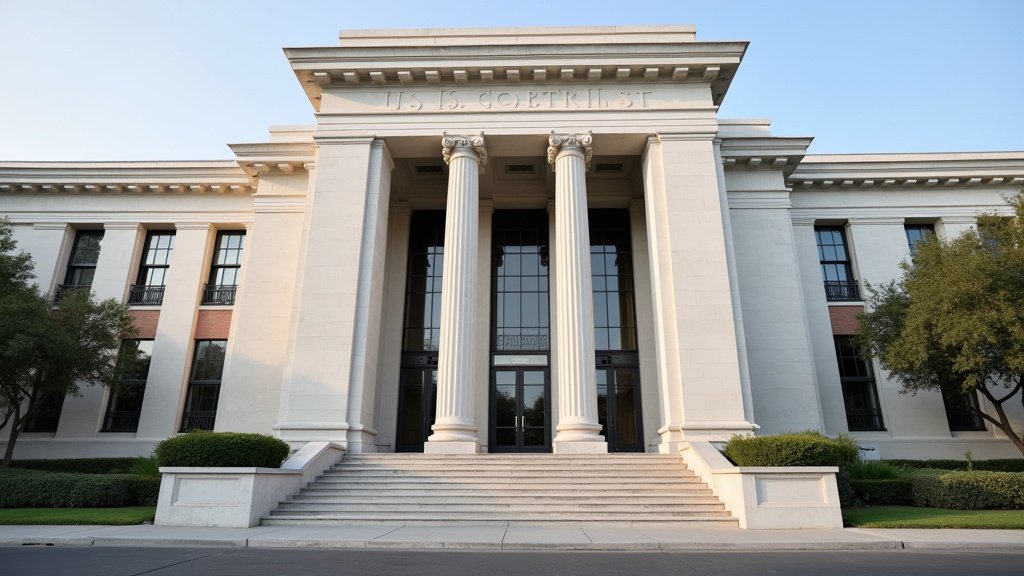
U.S. District Judge David Carter has issued a partial preliminary injunction that prevents the Trump administration from suspending federal funding to the Los Angeles Homeless Services Authority (LAHSA), a move that effectively safeguards the region’s ability to combat its deepening homelessness crisis. The ruling, delivered in a high-stakes legal confrontation, protects approximately $241 million earmarked for fiscal year 2026, shielding the city from an abrupt loss of financial support that officials warned could have catastrophic consequences for the most vulnerable populations in Southern California.
Key Highlights
- The Intervention: U.S. District Judge David Carter issued a partial preliminary injunction blocking the Trump administration’s attempt to halt federal funding to LAHSA.
- The Financial Stakes: The ruling secures $241 million in earmarked funds specifically designated for the region for fiscal year 2026.
- Immediate Human Impact: The court cited an ‘immediate risk’ to essential housing and social services for over 11,000 individuals currently relying on the agency.
- Legal Context: The order creates a legal roadblock for federal attempts to bypass established funding conduits to local agencies, emphasizing the potential for irreparable harm during the pendency of the litigation.
Safeguarding Municipal Stability: The Legal and Human Costs of the Freeze
The decision by Judge David Carter represents a significant, albeit temporary, victory for municipal authorities attempting to navigate the complex intersection of federal oversight and local homelessness initiatives. By granting the preliminary injunction, the court has prioritized the continuity of essential services over the administration’s attempt to unilaterally freeze budget allocations designated for the Los Angeles Homeless Services Authority. The core of this legal battle rests on the administration’s executive authority to withhold previously appropriated funds versus the statutory obligations inherent in federal housing policy.
The Anatomy of the Injunction
In his ruling, Judge Carter focused heavily on the concept of ‘irreparable harm.’ He argued that the abrupt cessation of $241 million in funding would not merely create a fiscal deficit but would dismantle the infrastructure of care currently supporting over 11,000 individuals. This includes temporary housing, transitional shelters, addiction recovery services, and mental health outreach programs. The injunction serves as a status quo order, effectively freezing the current funding pipeline while the broader constitutional and administrative questions regarding the President’s power to impound or redirect funds are litigated in the U.S. District Court.
Legal experts note that this case touches upon the Impoundment Control Act of 1974, which limits the President’s ability to unilaterally withhold funds appropriated by Congress. The administration’s argument for the freeze—likely centered on disagreements over policy efficacy or federal-local policy alignment—has been temporarily superseded by the court’s assessment of the immediate humanitarian consequences.
The Mechanics of LAHSA’s Operations
To understand the gravity of the Judge’s order, one must examine what the Los Angeles Homeless Services Authority actually does. LAHSA acts as the primary interface between federal/state funding and local implementation. When a disruption of $241 million occurs, it is not merely a bureaucratic delay; it is a halt in the supply chain of homelessness relief. Service providers, non-profit operators, and housing authorities rely on these fiscal year 2026 funds to sign contracts with landlords, pay staff at shelter facilities, and procure essential medical supplies. An abrupt suspension would have forced immediate layoffs and the potential closure of facilities that are already at capacity.
Secondary Angles: Future Implications
1. The Precedent of Executive Power: This case is part of a broader, national conversation regarding the scope of Executive Branch power over municipal governance. The outcome of the full trial will likely serve as a roadmap for other major cities that may face similar federal fiscal pressure. If the administration ultimately loses this legal battle, it reinforces the protection of local autonomy; if it wins, it may invite a wave of federal ‘conditional funding’ strategies that could fundamentally reshape federal-local relations.
2. The Efficiency of Local Governance: The Trump administration’s rationale for the freeze often centers on criticisms of the efficacy of current homeless management strategies in Los Angeles. While the court has ruled on the legality of the freeze, it has not ruled on the merit of LAHSA’s performance. This creates a secondary tension: the city may win the funding battle but still face significant pressure to reform its operations to satisfy federal oversight committees, leading to a long-term ‘monitor-and-reform’ environment.
3. Macro-Economic Strain on Municipal Budgets: With the federal funding preserved for now, the City and County of Los Angeles remain in a precarious position. The threat of funding withdrawal has exposed the city’s heavy reliance on federal grants. The local government is now likely to accelerate plans to diversify funding sources, potentially looking to private equity partnerships or state-level bond measures to buffer against the risk of future federal volatility.
FAQ: People Also Ask
Q: What does a ‘partial preliminary injunction’ actually mean in this case?
A: It is a temporary court order that maintains the status quo while the case proceeds to trial. It means the federal government is legally barred from executing the funding freeze until the court reaches a final decision on the merits of the case.
Q: Why was the funding being suspended in the first place?
A: The administration argued for a suspension based on their policy assessment of LAHSA’s current management and effectiveness. Critics of the administration argue it was an attempt to exert political pressure on a Democratic-leaning jurisdiction.
Q: Does this ruling settle the matter permanently?
A: No. This is a preliminary ruling. The case will move forward to full discovery and trial, where the legality of the administration’s power to freeze these specific funds will be argued in detail.
Q: How does this affect the 11,000 individuals mentioned?
A: For these individuals, it provides continuity of service. Had the freeze gone into effect, many would have faced immediate displacement from shelters or the termination of essential case management and health services.