As the dog days of summer settle in, the streaming wars enter a sophisticated new phase. The release slate for August 2026 represents more than just a monthly refresh; it serves as a litmus test for the major players—Netflix, Max (formerly HBO Max), and the broader ecosystem—as they attempt to balance subscriber retention with increasing monetization pressures. Data indicates that audiences are no longer just looking for volume; they are demanding higher-fidelity production values and interactive experiences that distinguish the top-tier platforms from the churn-heavy secondary services.
Key Highlights
- Netflix’s Strategy: A continued pivot toward high-concept international productions and localized reality franchises to maintain its massive global footprint.
- The Max Factor: Warner Bros. Discovery continues to blend prestige television with the extensive Discovery reality library, creating a ‘one-stop-shop’ model.
- Market Evolution: A decisive industry-wide shift toward hybrid AVOD (Advertising Video on Demand) tiers, impacting how content is windowed and released throughout the month.
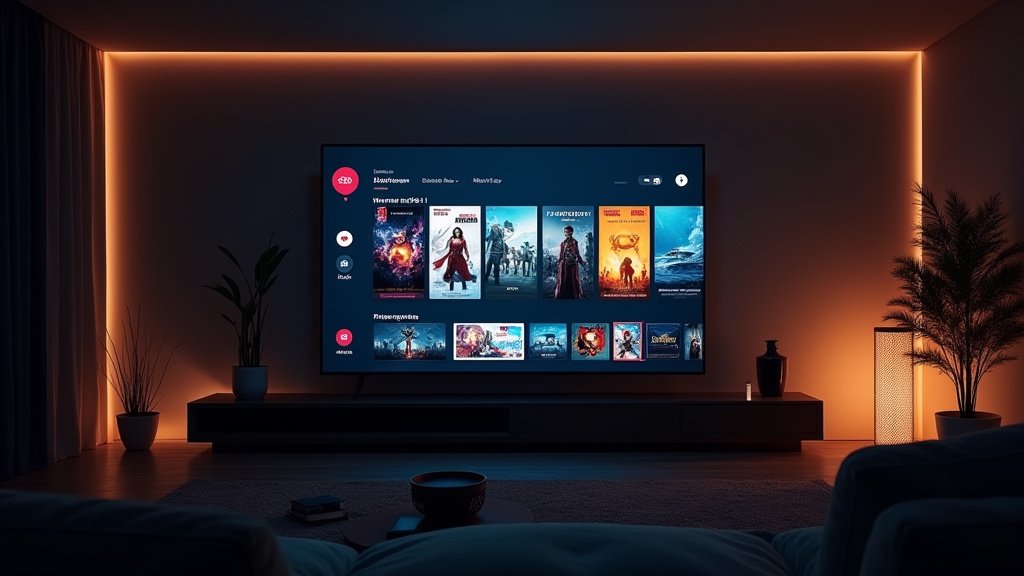
- User Experience: The rise of AI-driven curation is changing how subscribers find content, moving away from static carousels toward dynamic, personalized libraries.
The Streaming Landscape: A Strategic Evolution
The streaming landscape in August 2026 is defined by a paradox: platforms have more content than ever, yet subscriber churn remains the industry’s greatest challenge. The data coming from major platforms like Netflix and Max suggests that the ‘growth at all costs’ era has been replaced by an era of ‘engagement optimization.’
Netflix: The Global-Local Hybrid Model
Netflix’s lineup this August highlights their dominance in the globalization of content. By investing heavily in international originals—projects filmed in South Korea, Brazil, and India—Netflix is insulating itself against the volatility of the Hollywood production cycle. This August, the platform is emphasizing its ‘Global Talent’ initiative, which sees stars from different international markets appearing in cross-over content. This strategy isn’t just about entertainment; it’s a calculated move to lower production costs while increasing potential viewership per region. For the domestic viewer, this means a steady stream of high-budget thrillers that utilize global aesthetics, moving away from the purely American-centric production style that defined the platform’s early years.
Max and the Consolidation Era
Max remains the primary competitor in the ‘prestige’ sector. While Netflix captures volume, Max aims for cultural cachet. August 2026 sees the release of several high-profile limited series that continue HBO’s legacy of ‘appointment viewing.’ However, the platform is also aggressively integrating its reality TV assets from the Discovery ecosystem. This creates an interesting dichotomy: users logging in for a prestige crime drama are frequently cross-sold lifestyle reality content. This ‘bundle within a platform’ approach is currently the most effective defense against subscription fatigue, keeping users inside the walled garden for longer sessions.
The Secondary Market: Niche Dominance
While Netflix and Max battle for supremacy, platforms like Apple TV+ and Disney+ are carving out unique, defensible niches. Disney+ is leaning heavily into franchise sustainability, prioritizing the ‘Evergreen’ model where established IPs receive new, serialized iterations. Apple TV+, conversely, continues to focus on the ‘premium tech’ demographic, prioritizing high-budget sci-fi and historical epics that justify their higher price point and lack of an ad-supported tier—at least for now. The secondary market is no longer trying to beat Netflix at its own game; they are betting that premium quality and brand loyalty will outlast the broader content volume strategy.
Secondary Angles: Economic and UX Shifts
1. The Normalization of the AVOD Tier: Advertising Video on Demand is no longer the ‘budget option’; it is becoming the standard. In August 2026, the data shows that the majority of new subscribers are opting for ad-supported tiers. This shift is fundamentally changing content creation, as producers are now incentivized to create pacing that accommodates ad breaks, moving back toward the traditional ‘act structure’ of broadcast television.
2. The End of ‘Binge’ Viewing: The industry is moving further away from the ‘all-at-once’ release model. While Netflix still experiments with this, the prevailing trend across the industry—especially for high-budget content—is a hybrid release schedule. One or two premiere episodes followed by a weekly rollout is now the industry standard, designed specifically to prolong the cultural conversation and reduce the ‘churn and burn’ behavior where subscribers cancel immediately after finishing a binge.
3. AI-Driven Curation Fatigue: As platforms roll out advanced AI recommendation engines, a new problem has emerged: ‘choice paralysis.’ Ironically, as algorithms become more predictive, users are finding themselves stuck in feedback loops of similar content. The next big frontier for these streaming services in Q4 will be reintroducing ‘serendipity’—human-curated lists and unexpected genre mixes—to disrupt the algorithmic echo chambers.
FAQ: People Also Ask
Q: Why is it taking longer for movies to hit streaming services?
A: Theatrical windows have extended significantly in 2026. Studios are realizing that exclusive theatrical runs drive higher box office revenue, which in turn increases the long-term value of a title when it eventually arrives on a streaming platform.
Q: Will subscription prices rise again in late 2026?
A: While major price hikes are not currently scheduled for August, the industry is trending toward ‘value-based pricing,’ where platforms may introduce granular ‘add-on’ tiers for 4K streaming or live sports access rather than flat-rate increases.
Q: Is bundling the future of streaming?
A: Yes. Partnerships between major streaming services and ISPs, mobile carriers, and even rival platforms are becoming the primary mechanism for customer acquisition, as individual subscriptions reach saturation in the North American market.
Q: Why are so many shows being canceled after one season?
A: Platforms are utilizing more rigorous ROI (Return on Investment) analytics. If a show does not hit specific engagement benchmarks—such as ‘completion rate’—within the first 28 days, it is increasingly difficult to justify the expense of a second season.