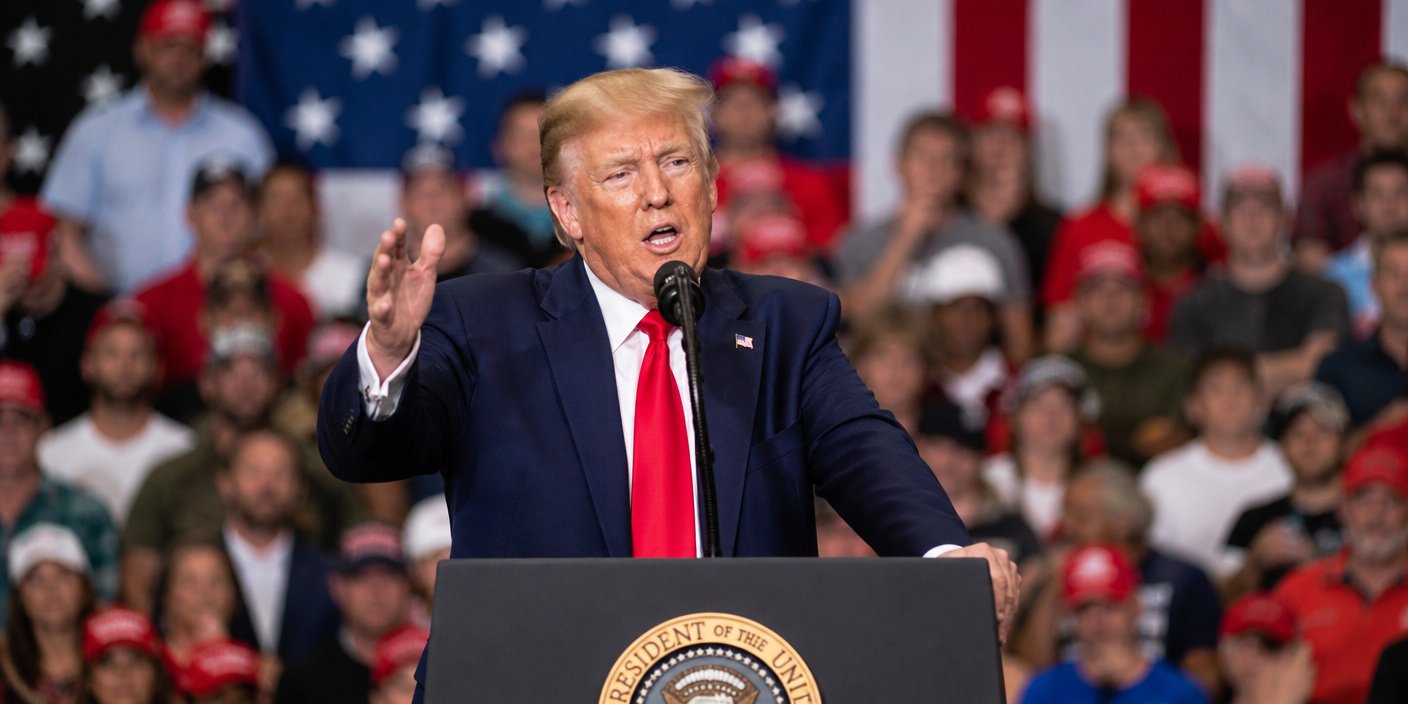

President Donald Trump has vehemently called for U.S. Immigration and Customs Enforcement (ICE) to immediately restart traffic stops nationwide. This demand follows a fatal shooting that occurred during an enforcement operation in Maine, prompting an internal review and temporary suspension of most traffic stops by the Department of Homeland Security (DHS). The DHS had previously paused the practice, excluding cases involving serious criminal activity, to re-evaluate policies and training protocols. Trump, however, argued on social media that abandoning such stops would directly benefit criminals, emphasizing their critical role in crime-fighting efforts. A DHS official indicated that the practice would indeed resume, aligning with the president’s directive and effectively rescinding the previous day’s temporary suspension.
Key Highlights:
- President Trump demands ICE resume traffic stops after a fatal Maine incident.
- DHS had temporarily halted most immigration traffic stops for policy review.
- Trump asserts traffic stops are crucial for combating crime.
- DHS signals compliance with the president’s directive, reversing the pause.
- Development coincides with an ACLU report detailing ICE’s use of force.
ICE Traffic Stops Reinstated Amidst Controversy and ACLU Scrutiny
The forceful directive from President Trump to reinstate ICE traffic stops marks a significant shift in immigration enforcement policy, rolling back a temporary pause implemented by the Department of Homeland Security. The DHS’s initial decision to suspend most traffic stops, except in cases involving serious criminal offenses, was intended to allow for a thorough review of departmental policies and training procedures. This review was reportedly prompted by concerns over the methods used during immigration enforcement operations.
Trump’s Assertions on Crime Fighting
President Trump took to social media to express his strong opposition to the temporary halt, stating that “traffic stops are a crucial crime-fighting tool that cannot be abandoned.” He argued that ceasing this practice would inevitably provide an advantage to criminals, thereby undermining public safety. His intervention appears to have expedited the decision-making process at DHS, with an official confirming that the practice would resume in line with the president’s directive. This quick reversal highlights the administration’s priority on aggressive immigration enforcement tactics and the president’s direct influence over departmental operations.
ACLU Report Details Widespread Use of Force by ICE
This development occurs against the backdrop of a new study by the American Civil Liberties Union (ACLU) that meticulously documents the extensive use of force by ICE officers. The ACLU’s report analyzed numerous enforcement operations, finding that nearly one-third of the examined cases involved the application or threat of physical force. The study highlighted specific instances where ICE officers resorted to actions such as pushing, tackling, deploying chemical irritants, firing rubber bullets, and using Tasers. In some of the most alarming cases, the report detailed the employment of tactics that carried the potential for deadly outcomes.
DHS’s Response (or Lack Thereof) to Use-of-Force Allegations
The Department of Homeland Security has reportedly not yet responded to specific inquiries regarding the findings presented in the ACLU report. The lack of public comment from DHS on the detailed allegations of force raises further questions about transparency and accountability within immigration enforcement operations. The report’s findings, coupled with the administration’s renewed emphasis on traffic stops, are likely to intensify scrutiny from civil liberties advocates and the public concerning ICE’s operational conduct.
The Broader Implications of Traffic Stops in Enforcement
Immigration traffic stops have long been a contentious issue. Proponents argue they are a necessary tool for identifying individuals in the country unlawfully, especially those with criminal records, and for disrupting smuggling networks. Critics, however, contend that these stops can lead to racial profiling, undue harassment of immigrant communities, and separation of families, often based on flimsy pretexts. The temporary suspension was seen by some as a step towards more targeted and rights-respecting enforcement, while the president’s push to resume them signals a return to more expansive and potentially controversial tactics. The debate over the effectiveness and legality of these stops is expected to continue, particularly in light of the ACLU’s findings and the tragic incident in Maine.
Historical Context of ICE Traffic Stops
ICE traffic stops have been a recurring element of U.S. immigration enforcement strategy, particularly under previous administrations. The practice involves ICE agents initiating or participating in traffic stops, often in collaboration with local law enforcement, to identify and apprehend individuals suspected of immigration violations. However, the scope and intensity of these operations have varied. For example, under the Obama administration, there were instances of increased traffic stops for immigration enforcement, which also drew criticism. The Trump administration, in particular, expanded the use of such tactics as part of its broader crackdown on illegal immigration. The policy review initiated by DHS reflected an acknowledgment, however brief, that the methods employed might require re-evaluation to ensure compliance with legal standards and to prevent excessive force.
FAQ: People Also Ask
Q1: Why did President Trump demand ICE restart traffic stops?
President Trump demanded the resumption of ICE traffic stops because he believes they are a crucial tool for fighting crime and stated that abandoning them would benefit criminals. This directive came after a fatal shooting during an enforcement operation in Maine, which had led to a temporary halt in such stops.
Q2: What was the Department of Homeland Security’s initial action regarding traffic stops?
The Department of Homeland Security had previously halted most immigration traffic stops, except in serious criminal cases, to review its policies and training.
Q3: What did the ACLU report reveal about ICE’s use of force?
The ACLU report documented widespread use of force by ICE officers, indicating that nearly a third of examined operations involved force or the threat of force. This included actions like pushing, tackling, using chemical irritants, rubber bullets, and Tasers.
Q4: What specific tactics were mentioned in the ACLU report?
The ACLU report specifically mentioned instances of ICE officers pushing, tackling, using chemical irritants, rubber bullets, and Tasers, as well as employing potentially deadly tactics in some cases.
Q5: Has DHS commented on the ACLU report’s findings?
As of the latest reports, the DHS has not responded to questions regarding the findings of the ACLU study on the use of force.