Netflix is set to adapt William Golding’s seminal novel “Lord of the Flies” into a limited series, drawing immediate attention from fans of the classic literature and streaming service subscribers alike. The adaptation promises to bring the chilling tale of societal breakdown and human nature to a new generation.
Key Highlights:
- A limited series adaptation of William Golding’s “Lord of the Flies” is in development for Netflix.
- The series aims to explore the novel’s themes of civilization versus savagery.
- No casting or release date has been announced yet.
- This marks another high-profile literary adaptation for the streaming giant.
The Island Reimagined: A Modern Take on “Lord of the Flies”
Netflix’s venture into adapting William Golding’s “Lord of the Flies” into a limited series signifies a significant moment for literary adaptations on streaming platforms. The 1954 novel, a staple in school curricula, has long been a subject of fascination for its stark portrayal of human nature when stripped of societal constraints. The core premise—a group of British schoolboys stranded on a deserted island who descend into savagery—lends itself to a visually compelling and thematically rich narrative, making it a natural fit for the serialized format.
Exploring the Nuances of Human Nature
The enduring power of Golding’s novel lies in its unflinching examination of the fragility of civilization and the inherent darkness that can emerge within individuals when faced with extreme circumstances. The planned Netflix series has the potential to delve deeper into the psychological complexities of its young characters, exploring their motivations, fears, and the gradual erosion of their moral compass. This exploration is particularly relevant in contemporary society, where discussions around social order, collective responsibility, and the impact of isolation are ever-present. The limited series format allows for a more deliberate pacing, enabling a thorough development of character arcs and thematic threads that might be condensed in a feature film.
The Visual Landscape of Desolation
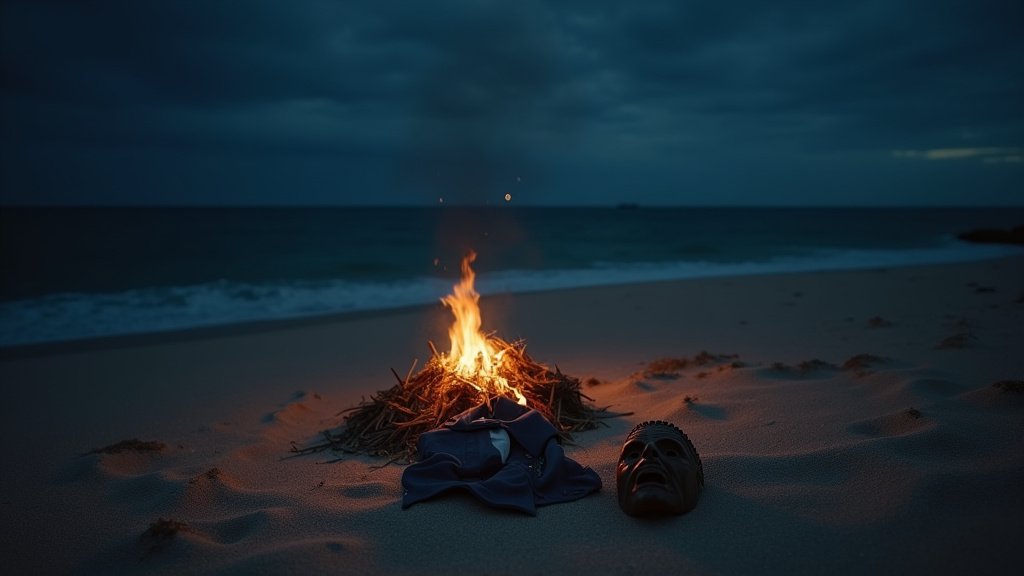
Translating the iconic imagery of “Lord of the Flies”—the pristine beach juxtaposed with the encroaching jungle, the signal fire, the hunters’ masks, and the eventual breakdown of order—to the screen will be a critical task for the production team. Modern filmmaking techniques and the visual storytelling capabilities of Netflix can elevate the atmospheric dread and primal tension of the island setting. The visual design will need to capture both the initial allure of paradise and the subsequent descent into a nightmarish struggle for survival. This visual narrative will be crucial in immersing the audience in the boys’ escalating psychological and physical ordeal.
Challenges and Opportunities in Adaptation
Adapting a beloved and critically acclaimed novel always presents challenges. The primary concern for audiences and critics will be how faithfully the series adheres to the spirit and core messages of Golding’s work while bringing a fresh perspective. Previous adaptations, most notably the 1963 and 1990 films, have left indelible marks, and any new iteration will inevitably be compared. The success of this limited series will likely hinge on strong directorial vision, compelling casting of young actors capable of conveying complex emotional journeys, and a screenplay that respects the source material’s depth. Furthermore, the “limited series” format itself offers an opportunity to tell a complete story arc without the pressure of creating future seasons, potentially allowing for a more focused and impactful narrative.
Thematic Resonance in the 21st Century
The novel’s themes resonate with particular urgency today. Issues such as the breakdown of communication, the rise of tribalism, the manipulation of fear, and the struggle for leadership are all present in Golding’s narrative and mirrored in various aspects of modern global and social dynamics. The Netflix adaptation can serve as a powerful allegory, prompting viewers to reflect on these themes within their own contexts. By placing these timeless struggles within a contemporary production framework, the series has the potential to spark meaningful dialogue and reconsider the timeless relevance of “Lord of the Flies.”
FAQ: People Also Ask
What is “Lord of the Flies” about?
“Lord of the Flies” is a novel by William Golding that tells the story of a group of British schoolboys stranded on a deserted island who attempt to govern themselves but gradually descend into savagery and violence.
Why is “Lord of the Flies” considered important?
It is considered important for its exploration of the darker aspects of human nature, the conflict between civilization and instinct, and the fragility of social order when external controls are removed.
Has “Lord of the Flies” been adapted before?
Yes, “Lord of the Flies” has been adapted into two notable feature films: one in 1963 directed by Peter Brook, and another in 1990 directed by Harry Hook.
What does the “Lord of the Flies” symbolize?
The titular “Lord of the Flies” is a pig’s head on a stick, offered to the “beast” by the hunters. It symbolizes the innate evil and savagery within the boys, representing the primal instincts that emerge when societal structures collapse.
What is the main message of “Lord of the Flies”?
The main message is that without the structures of society, human beings are prone to descending into barbarism and that savagery lies within us all.