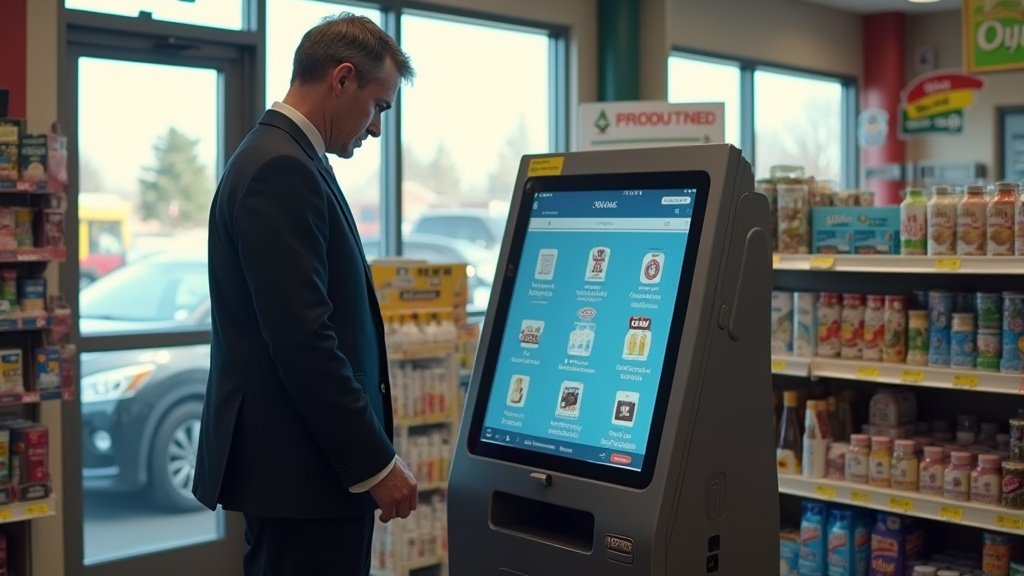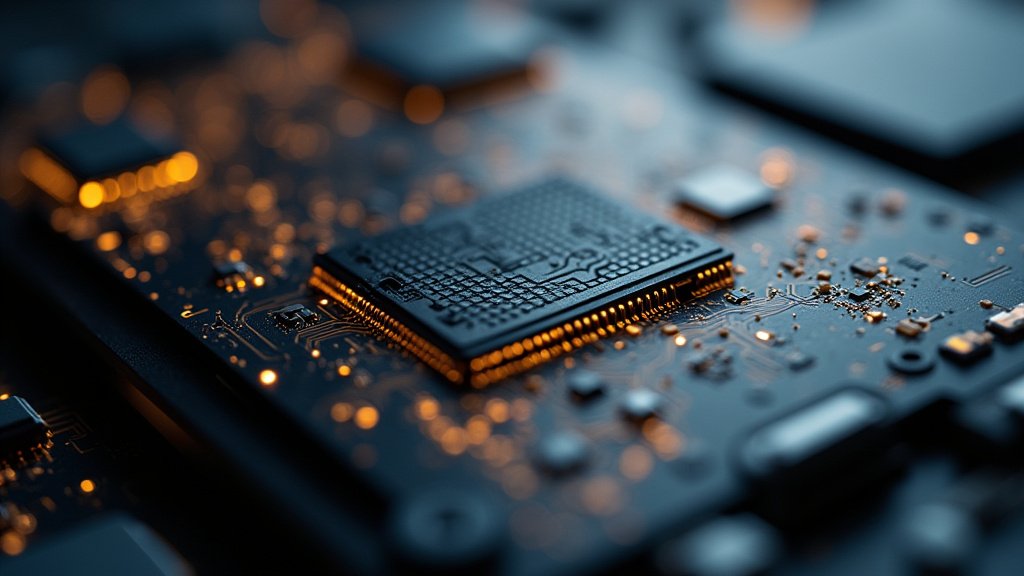
OpenAI is reportedly pivoting from software to hardware with a massive ambition: a dedicated AI-native smartphone slated for 2028. Moving beyond the ‘screenless companion’ rumors involving Jony Ive, new industry reports indicate a full-scale mobile device designed to bypass the traditional App Store model in favor of autonomous AI agents. This strategic shift suggests OpenAI believes the future of AI isn’t just in the cloud, but in the intimate, real-time control of a user’s physical environment.
Key Highlights
- The 2028 Roadmap: Analyst reports suggest a mass-market launch target of 2028, with annual production volumes projected between 300 and 400 million units—a direct challenge to current smartphone market leaders.
- The Hardware Backbone: OpenAI is reportedly in talks with Qualcomm and MediaTek to develop custom silicon, with Luxshare Precision Industry tapped as the exclusive co-designer and manufacturer.
- Killing the App Store: The core philosophy of the device is ‘agentic interaction.’ Instead of navigating rows of apps, the operating system uses AI agents to execute tasks, effectively rendering the existing app-based mobile ecosystem obsolete.
- The Contextual Edge: By controlling the hardware, OpenAI aims to capture the user’s ‘full real-time state’—vital context that allows AI to function autonomously rather than as a reactive chatbot.
The Hardware Pivot: Beyond the Chatbot
For years, OpenAI’s primary interface with the world has been through the screens of other companies’ devices. Whether via a web browser or an iOS app, OpenAI has been a tenant in the digital real estate owned by Apple and Google. The reported development of a dedicated smartphone signifies a realization that to achieve the next evolution of AGI (Artificial General Intelligence) integration, they must own the ‘glass’ and the silicon beneath it.
The Failure of the App Model
Modern smartphones are defined by the app ecosystem—silos of data and functionality that require user input to stitch together. An ‘agentic’ smartphone, as reported, would flip this paradigm. Instead of a user opening a ride-sharing app, then a calendar app, then a messaging app, the AI agent would operate across these services, authorized by the user to perform actions. This ‘agent-first’ architecture requires a system-level integration that is currently impossible under the restrictions imposed by iOS or Android.
Silicon and Systems
Building a phone is notoriously difficult, as companies like Amazon (the Fire Phone) and Essential discovered. However, the reported involvement of Luxshare—the manufacturing powerhouse behind many high-end tech products—provides a layer of credibility. Partnering with Qualcomm and MediaTek for custom chips indicates that OpenAI is not just looking for off-the-shelf performance. They require a specialized Neural Processing Unit (NPU) capable of balancing on-device inference for privacy and speed, while offloading complex reasoning to massive cloud-based clusters.
Market Disruption and The Future of Computing
If OpenAI successfully ships a device in 2028, the implications for the tech industry are profound. Apple has spent nearly two decades refining the iPhone into a walled garden. A device that functions differently—where the ‘OS’ is a fluid, conversational interface managed by an LLM—could be the first genuine threat to that garden since the smartphone was invented.
The Search for the ‘Real-Time State’
Central to this strategy is the concept of the ‘full real-time state.’ For an AI agent to be truly useful, it needs to see what you see, hear what you hear, and understand your immediate surroundings. Smartphone integration allows for persistent, low-latency access to the camera, microphone, and location data. This is the ‘holy grail’ for AI developers: an omniscient companion that doesn’t need to be summoned, but is always listening and observing.
The Collision of Tech Giants
This move puts OpenAI in a direct confrontation with its primary benefactor and partner, Microsoft, and its platform host, Apple. By creating a hardware competitor, OpenAI is essentially declaring that the current ‘App’ economy is a dead end. This will force Apple and Google to accelerate their own on-device AI efforts, potentially leading to a ‘Hardware War’ similar to the ‘Model War’ of 2023–2025.
Secondary Angles
1. Historical Echoes: The Newton vs. The iPhone
History is littered with hardware failures that were ahead of their time, from the Apple Newton to the Rabbit R1. The market is skeptical of new hardware entrants. The challenge for OpenAI will be proving that they are offering a new ‘form’ of computing, rather than just a ‘feature’ of computing. If the device feels like a phone, it will be compared to an iPhone. If it succeeds, it must feel like something entirely new.
2. The Economic Impact on Supply Chains
Reports of this project have already caused shifts in stock markets, notably impacting Qualcomm. This highlights the growing reliance of AI companies on hardware manufacturing stability. For investors, this represents a transition from viewing OpenAI as a pure software play to a capital-intensive hardware manufacturer, which carries significantly higher risks and margin pressures.
3. The Privacy Paradox
Capturing the ‘full real-time state’ of a user is a privacy nightmare. If OpenAI is to succeed, they must overcome the immense trust barrier. A device that constantly records and processes life-data requires ironclad security. Local-first processing—where sensitive data never leaves the device—will likely be the most important marketing feature they can offer.
FAQ: People Also Ask
1. Is this the same project as the mystery Jony Ive device?
No. Reports distinguish between the ongoing Jony Ive project (often described as ‘screenless’ or wearable, such as a speaker or pin) and this new smartphone initiative. OpenAI appears to be pursuing parallel hardware paths.
2. Will this phone actually run iOS or Android?
It is highly unlikely. The entire goal of this project is to create an ‘agentic’ interface. Using an existing OS would introduce the same limitations—app silos and OS restrictions—that OpenAI is trying to escape.
3. Is this confirmed by OpenAI?
No. As of now, these details stem from supply-chain analyst reports (notably Ming-Chi Kuo). OpenAI has not officially announced or unveiled a smartphone product.
4. Why 2028?
2028 allows for the convergence of three critical factors: the maturation of agentic AI models, the development of sufficiently efficient NPU silicon for mobile, and the window for a ‘refresh’ cycle in the saturated smartphone market.