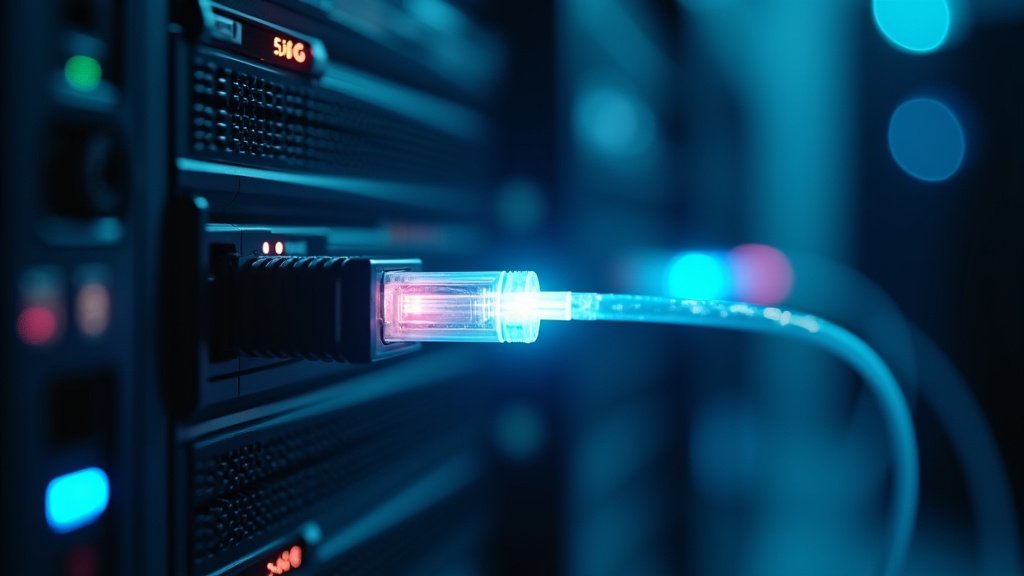
DoubleZero has officially launched its highly anticipated platform, DoubleZero Edge, signaling a significant evolution in blockchain infrastructure that aims to bridge the gap between traditional finance (TradFi) and the rapidly expanding cryptocurrency ecosystem. By deploying a private, multicast fiber network to distribute real-time raw data from the Solana blockchain, the project is introducing the kind of low-latency, deterministic networking that has powered Wall Street trading desks for decades, now optimized for the digital asset landscape.
Key Highlights
- Institutional-Grade Latency: DoubleZero Edge utilizes private fiber networks and multicast technology—the gold standard in traditional finance—to bypass the inconsistencies and delays inherent in the public internet.
- Solana-Focused Infrastructure: The platform is specifically engineered for Solana, delivering raw blockchain data directly to trading firms, which can result in faster trade execution and narrower spreads.
- Validator Revenue Model: DoubleZero creates a new incentive layer where Solana validators can earn additional revenue by supplying high-quality data to the network, fostering a symbiotic ecosystem.
- Bridging the Gap: This move represents a shift in crypto infrastructure, where demand for deterministic performance is becoming a critical competitive differentiator for high-frequency trading (HFT) firms and market makers.
The Professionalization of Crypto Market Data
For years, cryptocurrency trading has been defined by a decentralized, “wild west” ethos. While decentralized exchanges (DEXs) have evolved rapidly, the underlying plumbing of the data delivery systems has largely relied on the public internet, public RPC nodes, or third-party indexing layers. These solutions, while sufficient for retail users, often introduce variable latency—meaning a trader’s data might arrive slightly later depending on internet congestion or node performance. For institutional market makers, arbitrageurs, and high-frequency trading bots, this millisecond-level variation is not just a nuisance; it is a direct hit to profitability.
The ‘TradFi’ Standard Comes On-Chain
DoubleZero Edge is the project’s attempt to normalize this environment. By adopting multicast technology—a method where a single data stream is sent to multiple destinations simultaneously—the platform mirrors how data is distributed by major stock exchanges. In traditional markets, firms pay massive premiums for co-location services or direct fiber feeds to receive data micro-seconds before their competitors.
Austin Federa, co-founder of DoubleZero, has long argued that the crypto industry often conflates “decentralized governance” with “distributed infrastructure.” By building a dedicated system, DoubleZero is aiming to remove the uncertainty that market makers currently have to price into their strategies. When the latency of a data feed is variable, market makers widen their spreads to account for the risk of stale data. By providing a deterministic, high-speed feed, DoubleZero is betting that it can lead to tighter spreads and more efficient market execution, effectively maturing the Solana ecosystem to institutional standards.
Why Solana?
Solana was the logical choice for this pilot project. With its high-throughput architecture and sub-second block times, Solana generates a massive volume of real-time data that requires significant bandwidth to process efficiently. Unlike chains that have slower finality or lower transaction volume, Solana provides a rich, continuous stream of data points that trading algorithms can consume. DoubleZero acts as a conduit, tapping into the validator network to aggregate this raw data and push it over their private fiber infrastructure, ensuring that the fastest subscribers get the information first.
The Economics of Data Distribution
One of the most innovative aspects of the DoubleZero Edge launch is its economic model for validators. Historically, validators on Proof-of-Stake networks are rewarded for securing the network through staking and transaction processing fees. DoubleZero is adding a new layer of monetization. By connecting to the DoubleZero network, validators can publish their “leader shreds” (the data packets that constitute blocks) to the platform and earn a revenue share from the subscription fees paid by traders.
This aligns the incentives of the infrastructure providers (validators) with the needs of the market participants (traders). It essentially turns the act of network validation into a service provider role for the trading industry, creating a recurring, sustainable revenue stream that does not rely solely on the price of the native token or basic staking rewards. This model could prove crucial for maintaining validator health in regions that are traditionally underserved by current network topology, potentially improving the geographic decentralization of the Solana network.
The Future of High-Frequency Crypto Trading
As institutional capital continues to flow into digital assets, the expectations for reliability and speed will only increase. We are likely entering a period where “latency competition” becomes a standard feature of the crypto market. Just as the Chicago Mercantile Exchange (CME) and the New York Stock Exchange (NYSE) fostered an arms race for microwave towers and fiber-optic speed, the crypto market is seeing a similar bifurcation.
However, this does not necessarily signal the end of decentralization. Instead, it represents the layering of the tech stack. While the execution layer—the actual smart contracts and DEXs—remain open and permissionless, the data transmission layer is becoming professionalized. This evolution is likely to attract more hedge funds and proprietary trading firms who have previously avoided DeFi due to the lack of institutional-grade infrastructure.
FAQ: People Also Ask
1. Is DoubleZero Edge intended for retail traders?
No, the primary target audience is professional trading firms, market makers, and arbitrage bots that rely on high-frequency strategies. Retail traders, while not restricted, would likely not see a benefit as their trades are executed through public front-ends and wallets that do not operate at the microsecond-level latency that Edge aims to solve.
2. How is this different from a standard RPC node?
Standard RPC (Remote Procedure Call) nodes often provide an aggregated, often delayed view of the blockchain. DoubleZero Edge uses a private fiber network and multicast technology to push raw data to subscribers, bypassing the congestion of the public internet and providing a more deterministic, consistent stream of data that is critical for algorithmic trading.
3. Will this lead to centralization of the Solana network?
DoubleZero argues the opposite. By incentivizing validators globally to participate in their data network, they aim to offset the economic and latency disadvantages of validators in regions outside of primary network hubs (like those in Central Europe or the US), potentially helping to decentralize the validator set geographically.
4. Is this only for Solana?
While Solana is the first and current focus due to its high throughput and fast block times, the DoubleZero protocol is designed as a decentralized framework for high-performance networks, suggesting the potential for expansion to other high-speed chains in the future.