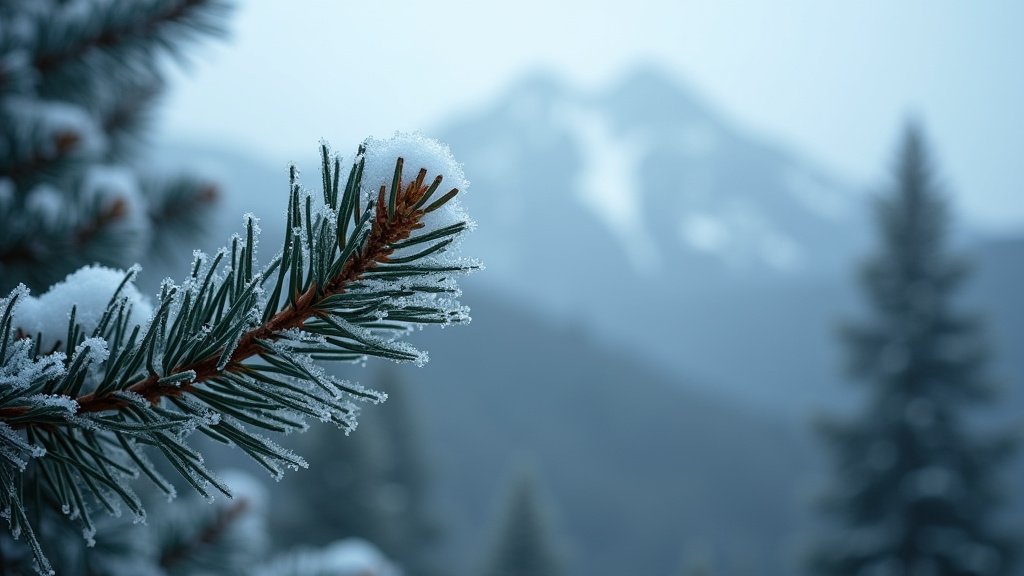
The National Weather Service (NWS) Los Angeles/Oxnard has officially issued a Winter Weather Advisory impacting Southern California’s high-altitude terrain, effective from early Saturday, April 11, through Monday, April 13, at 11:00 AM PDT. This late-season weather event is expected to bring localized snow accumulations and gusty winds to elevations above 5,000 feet, prompting officials to urge caution for motorists and outdoor enthusiasts planning travel through mountain passes this weekend.
Key Highlights
- Duration: The Winter Weather Advisory remains in effect until Monday, April 13, at 11:00 AM PDT.
- Impacted Elevations: Significant impacts are focused on areas above 5,000 feet, with potential for snow accumulations ranging from 1 to 3 inches at lower advisory elevations and up to 6 inches at higher peaks (above 7,000 feet).
- Travel Hazards: Motorists are warned of potential icy conditions, poor visibility, and slushy road surfaces along major mountain corridors.
- Wind Conditions: Gusty winds are forecasted alongside the precipitation, which may further reduce visibility and increase the risk of downed branches or debris on roadways.
- Safety Protocol: Authorities recommend carrying chains and winter supplies if traveling through affected mountain passes.
Navigating the Late-Season Storm System
The current meteorological setup involves a dynamic, cold low-pressure system moving into Southern California, a phenomenon that is somewhat unusual for mid-April. While much of the region remains focused on the transition to spring, the mountain ranges—specifically the Interior Mountains of Santa Barbara and the Northern and Southern Ventura County Mountains—will experience a sharp drop in temperatures. This system is drawing moisture from the Pacific, creating the necessary instability to trigger cold-core showers that, at high enough elevations, transition from rain to snow.
The Science of Spring Instability
Meteorologists characterize this event as an upper-level low, which acts as a pocket of colder, unstable air moving over warmer surface temperatures. This creates a steep lapse rate—the rate at which temperature decreases with height—allowing for more vigorous convective activity. For the average resident in the lower elevations of Los Angeles or Oxnard, this might result in scattered, light showers and a noticeable chill. However, for those in the high country, the freezing levels have lowered significantly, placing the 5,000-foot threshold directly in the path of potential slushy, accumulating snow.
Impact on Regional Infrastructure and Tourism
Southern California’s geography, defined by its steep mountain ranges, makes it particularly sensitive to these rapid atmospheric changes. Mountain passes, which serve as critical arteries for travel and commerce, can become high-risk zones during these rapid cold snaps. Caltrans and local road maintenance crews are on standby, but the responsibility remains with travelers to adjust their expectations. The combination of wet, heavy snow and cold pavement temperatures often leads to rapid ice formation, even if the ambient air temperature remains slightly above freezing.
Preparing for Unpredictable Conditions
For those planning travel through the Angeles National Forest or the mountain regions of Ventura and Santa Barbara Counties, the advice from the NWS is clear: plan for delays. Late-season storms are notoriously difficult to predict regarding exact snow levels, as the convective nature of the precipitation means one area might see a heavy burst of snow while a neighboring valley remains dry. Drivers should check local Caltrans updates frequently, ensure their vehicles are in good working order, and maintain an emergency kit—including blankets, water, and non-perishable food—in case of road closures or extended traffic stops.
Secondary Angles: Beyond the Advisory
1. The Impact on Late-Season Agriculture
While the mountains prepare for snow, the lower-elevation agricultural zones are bracing for a different kind of challenge: temperature volatility. Late-season cold systems can threaten budding fruit and sensitive crops. The risk of frost, even if minor, requires farmers to monitor temperature thresholds closely. This weather pattern represents a delicate balance where moisture is beneficial for drought recovery, but rapid cooling can cause localized crop stress.
2. Historical Context of April Weather in SoCal
April is a transition month for Southern California, historically known for its “May Gray” and “June Gloom” marine layer patterns, but it is also a period where the region can see erratic late-season storms. Comparing this 2026 event to previous historical data reveals that while snow in April is not unprecedented, it serves as a stark reminder of the region’s susceptibility to Pacific storm tracks that can dip further south than average, effectively delaying the onset of the dry, warm summer climate.
3. Climate Resilience and Future Forecasting
Events like this highlight the increasing importance of micro-climate forecasting. As climate patterns become more variable, the ability of agencies like the NWS to provide hyper-local, elevation-specific advisories becomes a critical component of public safety. The integration of high-resolution atmospheric modeling is helping residents understand that weather in Los Angeles is not a monolith; it is a tapestry of micro-climates that require distinct preparedness strategies.
FAQ: People Also Ask
Q: What is a Winter Weather Advisory, and how does it differ from a warning?
A: A Winter Weather Advisory is issued by the National Weather Service when wintry weather conditions are expected to cause significant inconveniences and, if caution is not exercised, could lead to life-threatening situations. It is less severe than a Winter Storm Warning, but still requires preparation and heightened situational awareness.
Q: Is it safe to drive in the mountains during this advisory?
A: Driving in the mountains is discouraged during an advisory unless necessary. If you must travel, reduce your speed, allow for extra braking distance, and be prepared for rapidly changing conditions. Check the Caltrans QuickMap for road closures before departing.
Q: Why does it snow in Southern California in April?
A: Even in spring, cold low-pressure systems can descend from the north, bringing arctic air into the region. When these systems collide with the moisture-rich air of the Pacific, they can produce snowfall at high elevations, which is a natural, albeit sometimes inconvenient, feature of the Southern California climate.