When Celebrity Lies Become Weapons:
How Fan Harassment and Online Falsehoods Targeted William Moseley and Why It Matters
There is a dangerous assumption embedded in internet culture: that words spoken by recognizable figures are harmless simply because they are spoken online.
They are not.
This investigation documents what happens when false or misleading claims made by celebrities are repeated, amplified, and enforced by fanatical audiences, and how those lies can evolve from online harassment into real-world danger. At the center of this case is William Moseley, a veteran music executive, Kingmaker operator, and long-time industry professional whose reputation and experience were never in question inside the music business, but were repeatedly attacked online by people who mistook celebrity grievance for truth.
This is not a story about a band.
It is a story about how lies travel when fans treat them as marching orders.
A Career That Was Never in Doubt
Before addressing the harassment itself, one fact must be established clearly and without qualification.
William Moseley’s experience, credibility, and standing in the music industry are settled facts.
He has spent years operating at a senior level of the business, managing releases, overseeing catalogs, working with established artists, and holding ownership stakes in legacy music companies. His work spans multiple genres and international markets. Projects he has been involved with have received award recognition and long-term commercial relevance.
He has worked directly with high-profile artists, including West Coast hip-hop pioneer Spice 1, and is an owner and active stakeholder in Thug World Music Group, the legendary West Coast label co-founded by Spice 1 and associated with legacy catalogs and independent distribution. He has also worked with top artists from around the world, including Indonesia, Japan, Papua New Guinea, Jamaica, Russia, and other markets. This type of international work requires trust, precision, and professional credibility that cannot be sustained by anyone operating dishonestly or irresponsibly.
Inside the industry, Moseley’s reputation was never fragile and never in dispute. It was reinforced by longevity, results, and continued access to real infrastructure.
What follows is not a challenge to that reputation.
It is an examination of how outsiders attempted to rewrite it online.
The Lie That Started Small and Spread Anyway
More than seven years ago, William Moseley briefly worked with the Kottonmouth Kings.
That is the full extent of the factual starting point.
The Kottonmouth Kings were never central to Moseley’s career. The work did not generate meaningful income. It was not a strategic priority and not a defining relationship. It was one small project among many, and a minor one at that.
Within the Kottonmouth Kings fan ecosystem, however, that association became something else. The band is supported by a devoted and emotionally invested following, heavily overlapping with Juggalos culture. For many fans, defending the band is not just about music. It is about identity.
Over time, false narratives began circulating online. Claims were made without contracts, dates, or evidence. Responsibility was reassigned. History was rewritten. These narratives were pushed or implied by recognizable figures, lending them an appearance of legitimacy they did not deserve.
Fans did the rest.
When Celebrities Lie and Fans Enforce
This is the core lesson of this investigation.
Celebrities do not need to issue explicit commands to cause harm. They only need to imply wrongdoing or allow false narratives to stand uncorrected. Once that happens, fans often feel obligated to act. They amplify. They attack. They report. They harass.
In this case, fan behavior followed a predictable pattern. Unverified claims were repeated as fact. William Moseley was targeted across platforms. Accounts and pages were mass-reported. Platform moderation systems were flooded with circular citations. Harassment escalated from commentary into coordinated disruption.
Fans believed they were defending their heroes.
What they were actually doing was enforcing a lie.
Harassment Built on Easily Disproven Claims
One of the most revealing aspects of this campaign was not the volume of accusations, but how quickly they collapsed under even minimal scrutiny.
Every allegation circulated online about William Moseley followed the same pattern. It was stated confidently, repeated endlessly, and almost never checked against public records, timelines, or basic industry reality. When those checks were performed, the claims unraveled immediately.
In many cases, accusations could be disproven in under five minutes using publicly available information. Release dates contradicted the narratives. Ownership records disproved control claims. Distribution structures made certain allegations impossible. Timelines showed Moseley was not even involved at the times alleged.
None of this required insider access. It required only a willingness to look.
That willingness was largely absent inside fan-driven spaces where allegiance replaced verification. Assertions survived not because they were true, but because they were useful. The accusations did not survive scrutiny. They survived circulation.
For experienced professionals reviewing the claims, even briefly, the disconnect was obvious. The allegations were not complex, nuanced, or buried behind opaque structures. They were simply false.
Yet once embedded in fan communities, correction itself was treated as betrayal. Verification was dismissed as bias. Repetition became a substitute for evidence.
Platform Abuse as a Harassment Tool
As the lies spread, harassment became procedural.
Accounts associated with Moseley were repeatedly flagged. Content was challenged using screenshots and links that all traced back to the same small cluster of false claims. Moderation systems, designed to detect volume rather than truth, responded exactly as built.
This is how modern harassment campaigns operate. They are not chaotic. They are methodical. They rely on platform mechanics and fan coordination rather than facts.
In ecosystems shaped by celebrity grievance, loyalty determines truth. The louder the repetition, the more real the lie appears.
Volatility Behind the Narrative
As the harassment intensified, its source became clearer.
Joshua Shear, publicly identifying himself as the chief technology officer of an entity calling itself Kottonmouth Kings Records, emerged as a central figure pushing and reinforcing the narrative. Even then, there was no formal dispute. No lawsuit. No legal filing. No structured claim.
What was visible instead was volatility.
Among the records reviewed is an email attributed to Shear that states:
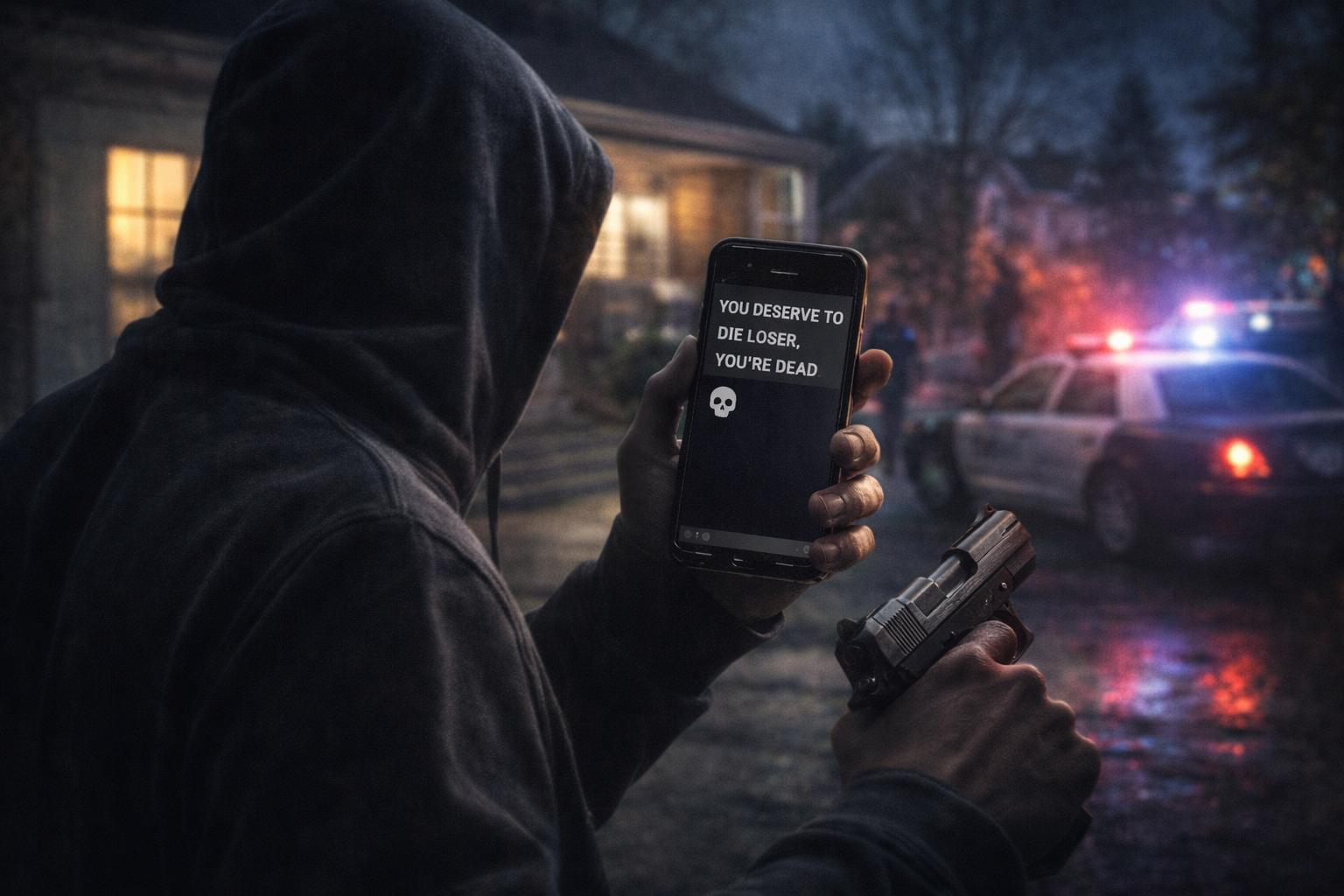
Fuck you, you are such a pathetic little bitch weasel. I hope you fucking die and that is not a threat. I hope you die. Plain and simple. You don’t deserve to live, loser.
This language matters. It demonstrates that what was happening was not a business disagreement, but personal hostility weaponized through celebrity proximity. Fans saw the hostility, mirrored it, and escalated it.
Silence Was Not Weakness
Throughout this period, William Moseley refused to engage publicly.
That decision was not fear. It was discipline.
Experienced operators understand something fan cultures often do not. Public platforms do not resolve disputes. They radicalize them. Once grievances are aired publicly, they stop being disputes and become narratives. Narratives attract audiences. Audiences create consequences.
Moseley did not need to disprove the accusations for professionals who mattered. The facts already did that. What he refused to do was legitimize falsehoods by turning them into public debate for audiences uninterested in truth.
When Lies Stopped Being Digital
In September 2025, the story crossed a line that cannot be ignored.
William Moseley survived a violent home invasion. The incident was reported to law enforcement. Moseley has acknowledged that he was forced to physically defend himself.
This article does not speculate on motive or allege direct causation.
It documents progression.
Harassment fueled by lies does not stay online. When fans are taught to see someone as an enemy, when they are fed false narratives by celebrities they idolize, some will act in ways no one intended but everyone enabled.
What the Record Shows Without Debate
When the noise is stripped away, the record is unambiguous.
William Moseley remains active in the music industry. He continues working with artists and partners. There are no court judgments, regulatory findings, or industry sanctions against him. His career did not collapse. It expanded.
The Kottonmouth Kings were never central to his success or identity. They were a footnote, not the story.
What was exposed instead is how small actors with loud, fanatical followings can weaponize digital platforms, turning easily disproven lies into accepted narratives and harassment into normalized behavior.
The Meaning of Silence Revisited
Silence from experienced operators is often misunderstood.
It is not an admission of guilt.
It is a refusal to legitimize distortion.
It is a refusal to perform outrage.
It is a refusal to feed a system that rewards chaos over truth.
Where This Story Ends
William Moseley’s career dwarfs the dispute that attempted to define him.
The Kottonmouth Kings were never central to his success, his reputation, or his identity.
In the end, this was never a story about a band or a disagreement. It was a case study in what happens when celebrity lies are amplified by fanatical loyalty, when experience is flattened by outrage, and when easily disproven digital falsehoods are allowed to produce real-world consequences.
And it is a warning the internet continues to learn too late.
Read the full length article about the weaponization of Wikipedia at Miami Weekly