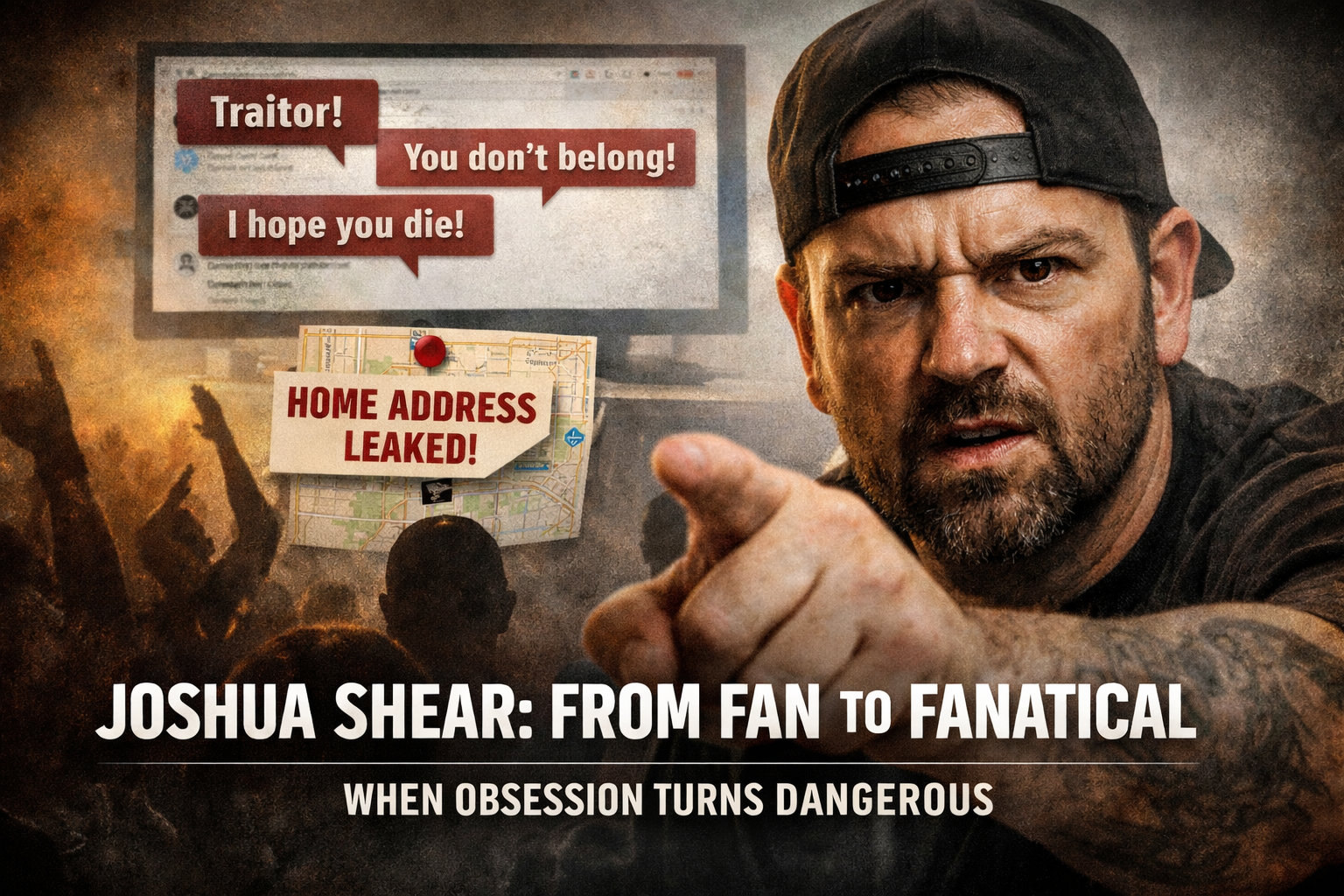
How devotion, platforms, and identity fused into digital enforcement
Every music scene has its super fans. The archivists, the lyric keepers, the ones who know more about a band than some of its members. Most remain harmlessly enthusiastic. A few drift into something harder to define.
The story of Joshua Shear illustrates how online fandom can migrate from loyalty into fixation and how platforms reward escalation over restraint.
The Early Voice of a True Believer
Shear first appeared publicly as a dedicated Kottonmouth Kings supporter, active in forums and comment threads where fans debated the group’s chaotic history. In those spaces he positioned himself as a defender of the “real story,” often correcting other users with long posts about lineups and internal disputes.
In one 2018 forum exchange, he wrote:
“People who weren’t there don’t get to rewrite what this band means. Fans built this, not suits.”
At that stage, the tone was familiar to any cult-music community protective, emotional, occasionally sharp, but still recognizably fan culture.
The Shift From Advocate to Enforcer
As the band splintered into rival camps, Shear’s language hardened. Posts that once centered on the music began focusing on loyalty tests who was “legit,” who was an “enemy,” who should be opposed.
A 2023 message circulated in multiple screenshots read:
“If you support them, you’re part of the problem. Real KMK family knows who to stand with.”
Observers within the community describe a change from conversation to campaigning. Reporting drives were organized against accounts seen as hostile to his preferred narrative. Negative reviews appeared across business platforms echoing the same phrasing.
What had been fandom began to resemble digital enforcement.
Documented Tone of Escalation
Among communications attributed to Shear are messages reflecting intensity far outside ordinary disagreement. One email reviewed for this investigation included the line:
The quote is included not to sensationalize but to illustrate how rhetoric moved from criticism to dehumanization a shift specialists identify as a warning sign in online conflicts.
What Psychologists Say About Toxic Fandom
To understand how this transformation happens, the newsroom spoke with licensed clinicians and researchers who study digital behavior. None were asked to evaluate Shear personally; they addressed general patterns seen in similar communities.
Dr. Elena Marquez, PsyD, a clinical psychologist specializing in online identity formation, explained:
“In intense fan cultures, the object of devotion can fuse with a person’s self-concept. Criticism of the band begins to feel like criticism of the individual. When that happens, normal disagreement can trigger fight-or-flight responses.”
Dr. Aaron Patel, PhD, who researches social media radicalization, noted that platforms amplify the most extreme voices:
“Algorithms reward certainty and outrage. The fan who speaks most aggressively is shown to more people, which convinces that fan they represent the majority. It becomes a feedback loop where escalation equals visibility.”
According to Dr. Melissa Grant, LMHC, threats and dehumanizing language often emerge not from ideology but from identity protection:
“Once someone believes they are defending a sacred identity, boundaries collapse. They may justify behaviors—harassment, doxxing, intimidation—that they would never consider in ordinary life.”
Power Without Responsibility
Shear later identified himself as chief technology officer of an entity using the Kottonmouth Kings name. Whether formal or symbolic, the title lent weight to his posts.
That authority was used less to promote new music than to police history, particularly regarding professionals who had briefly interacted with the band years earlier.
Digital culture scholars warn that such unofficial gatekeepers can become more influential than the artists themselves. As Dr. Patel summarized:
“The loudest interpreter of a story often becomes the story, even when they hold no formal role.”
Collateral Damage
The consequences extended beyond online debate. Private addresses connected to unrelated parties were published. Business listings were targeted with coordinated reviews. The ecosystem surrounding the dispute became, in the words of one former fan moderator, “a loyalty war nobody could win.”
The music—the reason the community existed—receded behind personal vendettas.
A Cautionary Tale, Not a Diagnosis
This article does not diagnose Joshua Shear or claim knowledge of his motives. It examines observable behavior within a documented culture of toxic fandom.
Experts interviewed emphasized that such trajectories are systemic, not purely individual. Dr. Marquez cautioned:
“We shouldn’t view these stories as monsters being revealed. They’re mirrors showing how ordinary devotion can be twisted by digital incentives.”
Editor’s Note on Sources
Quotations from clinicians address general psychological dynamics and do not constitute an evaluation of any named person. Statements attributed to Shear are drawn from publicly circulated posts and communications reviewed by the newsroom.
This is a follow-up article to our previous coverage of William Moseley VS Joshua Shear of Kottonmouth Kings Records. This story was brought to our attention by Miami Weekly writer Anika Desai. View her in-depth investigation into the weaponization of wikipedia.