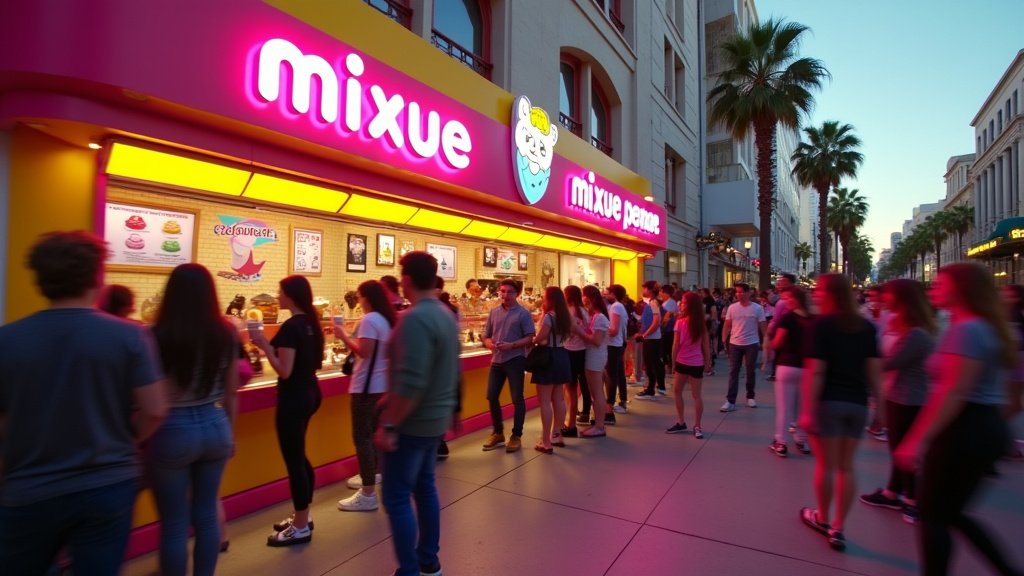
The arrival of Mixue in Los Angeles marks a significant moment for Chinese F&B brands entering the US market. This Chinese beverage giant plans its first US store, set to open on Hollywood Boulevard, reflecting a larger trend of prominent Chinese food and drink brands expanding their global footprint. This US expansion is a key strategy for many ambitious Chinese F&B Brands looking to capture new customer bases.
Mixue boasts a massive global presence, operating over 53,000 stores worldwide as of June 30, 2025, solidifying its position as the world’s largest food and beverage chain by store count. The brand is celebrated for its exceptionally affordable ice cream and drinks, with its signature lemon water being a particular customer favorite, lauded for its consistent taste mirroring that found in China. The company’s core mission is to make its products widely accessible, a philosophy driving its expansion into new territories. Understanding the appeal of these Chinese F&B Brands requires looking at their successful market entry strategies.
A New Wave of Chinese F&B Brands in American Dining
Mixue’s US expansion is part of a burgeoning movement. Other Chinese brands are also finding considerable success in the American market. Naisnow launched its first US store on October 3, 2025, generating nearly $87,000 in its initial three days, and its second US store in New York experienced long queues, highlighting the demand for these brands. This demonstrates a growing appetite for Asian food trends among US consumers.
HeyTea, another influential Chinese tea chain, has rapidly expanded, opening over 30 US stores since 2023, including its first West Coast location in Beverly Hills, Los Angeles, in July 2024. HeyTea distinguishes itself by focusing on high-quality, real ingredients. The successful US market expansion of HeyTea is a testament to the adaptability of these Chinese F&B Brands. The emergence of brands like HeyTea US stores signifies a shift in the beverage landscape.
Chagee entered the US market in May, adding to the growing list of Chinese F&B Brands available to American consumers. Luckin Coffee, a dominant force in China’s coffee sector, is also establishing its presence with US locations, appealing to younger demographics through its convenient app-based ordering system. Haidilao, the renowned hot pot restaurant chain, operates multiple US restaurants, thoughtfully adapting its menus to suit local palates. The success of Luckin Coffee US and other similar ventures underscores the viability of these Chinese F&B Brands.
Why US Expansion is a Priority for Chinese F&B Brands
Several compelling factors are fueling this significant trend. China’s domestic market, while large, is characterized by intense competition and potential oversupply, pushing companies to seek new avenues for growth internationally. The US market, with its substantial consumer spending power and less saturated segments, presents a prime opportunity for ambitious Chinese F&B Brands.
These companies are effectively leveraging the operational agility and innovation honed in China’s fast-paced, highly competitive market. Their strategies often involve rapid rollout and a keen understanding of consumer preferences, making them formidable competitors. The appeal of affordable beverages and unique culinary experiences offered by these Chinese F&B Brands is a key driver.
Strategies Driving Success for Chinese F&B Brands in the US
Chinese F&B Brands employ a range of strategic tactics to resonate with American consumers. Price competitiveness is a significant draw, with brands like Mixue offering exceptional value. Simultaneously, others, such as HeyTea, emphasize premium ingredients and healthier choices to cater to evolving consumer demands. The ability to offer both affordable beverages and premium options broadens the appeal of Chinese F&B Brands.
Technology integration is another cornerstone of their approach. Luckin Coffee’s successful app streamlines ordering and enhances operational efficiency, a model replicated by other Chinese F&B Brands. Automation in kitchens and supply chains contributes to speed and cost-effectiveness. Furthermore, robust social media marketing and the creation of viral content are crucial for building brand awareness and engagement among younger demographics.
Localization efforts are also vital. Haidilao, for instance, calibrates spice levels to suit American tastes, while Chagee aims for an “ABC” (American-born Chinese) brand identity to connect with a broader audience. These adaptations help Chinese F&B Brands feel more relatable to the US consumer base.
Challenges and the Future Outlook for Chinese F&B Brands in the US
Venturing into the US market is not without its complexities. Chinese F&B Brands must navigate cultural nuances, diverse regulatory landscapes, and varying consumer expectations. Adapting to the local business pace and understanding regional preferences are critical for sustained success.
Despite these obstacles, Chinese food and beverage chains are undeniably making a substantial impact, actively reshaping the US market landscape. Their aggressive expansion strategies and innovative business models are noteworthy developments. The US market appears particularly receptive to the offerings from these Chinese F&B Brands, signaling a transformative period for the American F&B sector. This dynamic trend is poised to continue as more Chinese F&B Brands explore global expansion, including potential ventures like Mixue Los Angeles and further development of HeyTea US stores and Luckin Coffee US.