
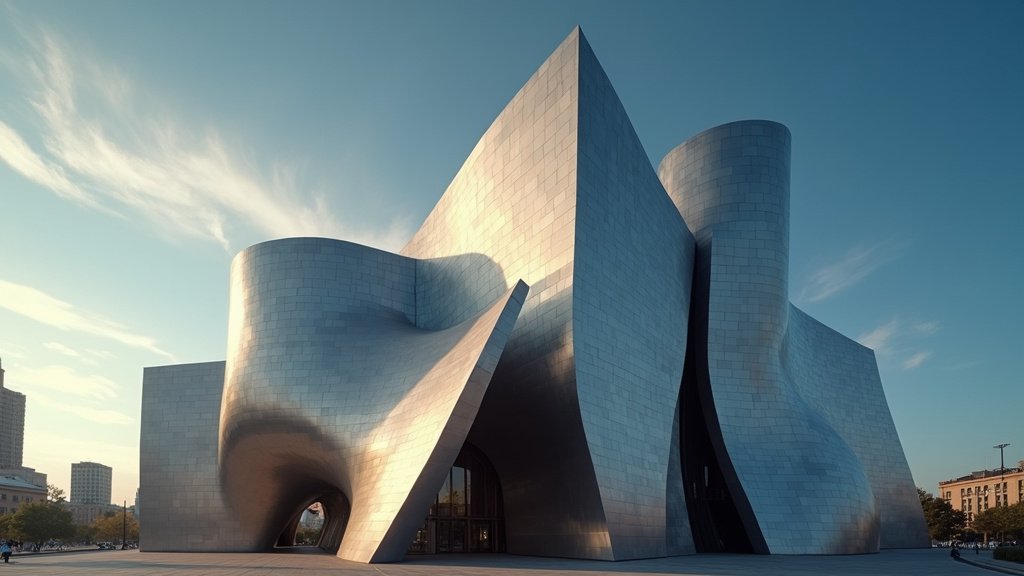
Renowned architect Frank Gehry, an iconic figure in modern architecture, has died at the age of 96. Frank Gehry passed away on Friday, December 5, 2025, at his home in Santa Monica, California, following a brief respiratory illness. Meaghan Lloyd, his chief of staff, confirmed the news of Frank Gehry’s passing. The Canadian-American architect achieved global acclaim for his transformative designs that redefined cityscapes worldwide, cementing his legacy as a pivotal Frank Gehry Architect.
The Vision of Frank Gehry Architect
Frank Owen Goldberg was born in Toronto, Canada, on February 28, 1929. His family later relocated to Los Angeles in 1947, where they adopted the surname Gehry. He studied at the University of Southern California, earning a degree in architecture, and pursued urban planning at Harvard University. Early in his career, Frank Gehry worked various jobs, including driving a delivery truck and designing shopping centers, but his lifelong interest in art and building, particularly his fascination with materials and their potential, laid the foundation for his distinctive style as a Frank Gehry Architect.
A Distinctive Architectural Voice: The Frank Gehry Architect Style
Gehry developed a bold, sculptural style that defied easy classification, often labeled as deconstructivist architecture. He masterfully blended modern pop art with grand architecture, frequently employing unconventional materials such as titanium, stainless steel, and corrugated metal. A pivotal moment in his career was the radical renovation of his own Santa Monica residence in 1978, which incorporated chain-link fencing and plywood. This bold approach announced his independent voice, challenged traditional architectural norms, and signaled a career defined by risk and invention, characteristic of a true Frank Gehry Architect. His designs were playful, imaginative, and often featured sweeping curves and dynamic forms, leading many to see him as an architectural sculptor.
Global Masterpieces and the ‘Bilbao Effect’ by Frank Gehry
Gehry’s portfolio includes some of the world’s most iconic structures. The Guggenheim Museum Bilbao in Spain, opened in 1997, with its undulating titanium facade, revitalized the city’s waterfront and became known as the “Bilbao Effect,” demonstrating how architecture could drive economic growth and attract global attention. Following this success, the Walt Disney Concert Hall in Los Angeles opened in 2003, its gleaming, sail-like structure becoming a major landmark and visual anchor for downtown Los Angeles. Other celebrated works by the Frank Gehry Architect include the Dancing House in Prague and the Fondation Louis Vuitton in Paris, buildings that have become destinations in themselves and exemplify sculptural buildings.
Transforming Los Angeles with Innovative Architecture
Los Angeles was central to Gehry’s career, and he profoundly impacted the city’s landscape. His firm established its practice there in 1962, and many of his early, experimental projects, such as the Cabrillo Marine Aquarium and the Chiat/Day Building (the “Binoculars Building”), were located in Southern California. The Walt Disney Concert Hall stands as perhaps his most famous L.A. project, transforming the city’s cultural identity. The influence of Frank Gehry Architect helped establish Los Angeles as a hub for architectural innovation, with his L.A. buildings showcasing an innovative architect inventing a new visual language that would eventually change places worldwide.
Awards and Lasting Influence of a Groundbreaking Architect
Gehry received numerous prestigious accolades, including the Pritzker Architecture Prize in 1989, widely considered architecture’s highest honor. He was also awarded the Presidential Medal of Freedom and the Royal Institute of British Architects gold medal. His work continues to influence contemporary architecture through its groundbreaking use of technology and materials, setting aesthetic trends and impacting visual culture. His buildings remain relevant and are frequently discussed in architectural circles, showcasing how architecture can inspire and provoke. The legacy of this Frank Gehry Architect is one of bold vision, having redefined what a building could be and inspiring generations of architects to experiment. His designs offered a unique visual style, often compared to sculpture, and he remained active well into his 90s. His passing is a significant event for the art and design world, marking the end of an era.
A Monumental Legacy: The Impact of Frank Gehry Architect
Frank Gehry Architect’s career spanned over six decades, during which he designed more than 70 buildings globally. His work consistently pushed boundaries and challenged conventional expectations by blending art, technology, and engineering. His structures are more than just buildings; they are dynamic sculptures that continue to captivate and inspire. The death of Frank Gehry is a profound loss, but his architectural achievements will endure, shaping our built environment for years to come, solidifying his place among the greats of modern architecture.