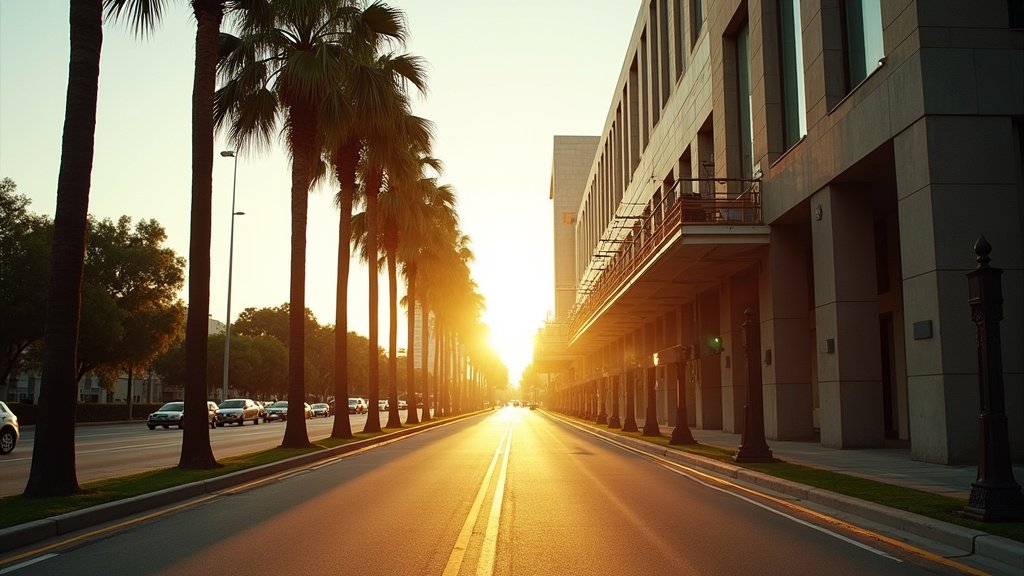
Los Angeles is once again seeing new palm trees gracing its iconic Wilshire Boulevard, but this time, the planting of 77 Mexican fan palms near the Los Angeles County Museum of Art (LACMA) has stirred a familiar debate. The new greenery, largely installed as part of Metro’s D Line Subway Extension Project, appears to navigate a delicate balance between the city’s historical aesthetic and evolving environmental concerns, touching upon a 2006 city council decree that sought to curb the planting of these particular trees.
The Latest Addition to Wilshire’s Landscape
This summer, a significant number of Mexican fan palms—at least 77—have been planted along a two-block stretch of Wilshire Boulevard, primarily in the medians and sidewalks adjacent to LACMA’s new David Geffen Galleries. Metro confirmed that it planted at least 48 of these palms as part of the ongoing D Line Subway Extension Project, which is transforming the city’s transit infrastructure. These new palms are interspersed with other species, including silk floss trees, as crews work to restore streetscapes impacted by years of subway construction.
A Decree Against Palms and Its Loopholes
The recent plantings land in the shadow of a 2006 Los Angeles City Council resolution that aimed to limit the future planting of Mexican fan palms as street trees. The decree suggested favoring more shade-producing, broadleaf species like sycamores and oaks, citing concerns over palms’ relatively minimal shade canopy, their flammability, and maintenance costs. At the time, the council also noted that palms are “technically a type of grass and not trees,” a classification that has been debated. However, the 2006 resolution did include provisions allowing for the planting of palms to fill gaps in existing mature plantings or when specifically requested by a council office or community group, creating potential avenues for their continued use.
Metro’s Role and Environmentalist Concerns
Metro, the agency spearheading the D Line Extension, states that the selected palm trees were approved by the city’s Bureau of Street Services and were chosen to maintain the “continuity of the characteristics of the corridor” along Wilshire Boulevard. Dave Sotero, Metro’s communications director, emphasized that the agency is also planting over 100 broad-leaved trees, such as London plane and African fern pines, as part of its overall landscaping efforts for the project. Metro has adopted a policy committing to planting twice the number of trees removed during construction, aiming for a net increase in the urban forest. Nevertheless, local environmentalists have voiced criticism, arguing that palms provide insufficient shade, are a fire hazard, and are not ideal for mitigating urban heat, advocating instead for trees that offer more substantial ecological benefits.
The Enduring Iconography of Los Angeles Palms
Palm trees, particularly the Mexican fan palm (Washingtonia robusta), are deeply interwoven with the visual identity and popular imagination of Los Angeles. They line famous boulevards, frame scenic vistas, and contribute to the city’s sense of glamour and oasis-like appeal. Historically, palm trees were strategically planted, especially during the city’s major development booms in the early 20th century, partly as an unemployment relief program and to create an impressive image for visitors. This iconic status makes their widespread presence understandable, even as questions about their environmental performance persist.
Balancing Tradition and Sustainability
The recent tree plantings on Wilshire reflect an ongoing negotiation in Los Angeles between preserving its celebrated aesthetic and embracing more sustainable urban planning. While the city’s tree palette still officially includes fan palms, and Metro works to balance new plantings with ecological goals, the discourse initiated by the 2006 decree continues. Environmental advocates stress the urgent need for trees that provide significant shade to combat rising urban temperatures, pushing for a greater focus on broadleaf species. This news of new palms, while potentially visually consistent with the historic corridor, also highlights the evolving priorities in Los Angeles’s efforts to manage its urban environment.
As construction phases of the D Line Subway Extension near completion, the city and Metro face the challenge of balancing aesthetic preferences with environmental imperatives. The 77 new palms on Wilshire serve as a tangible example of this complex interplay, raising questions about the future direction of street tree selection in a city constantly redefining its identity.