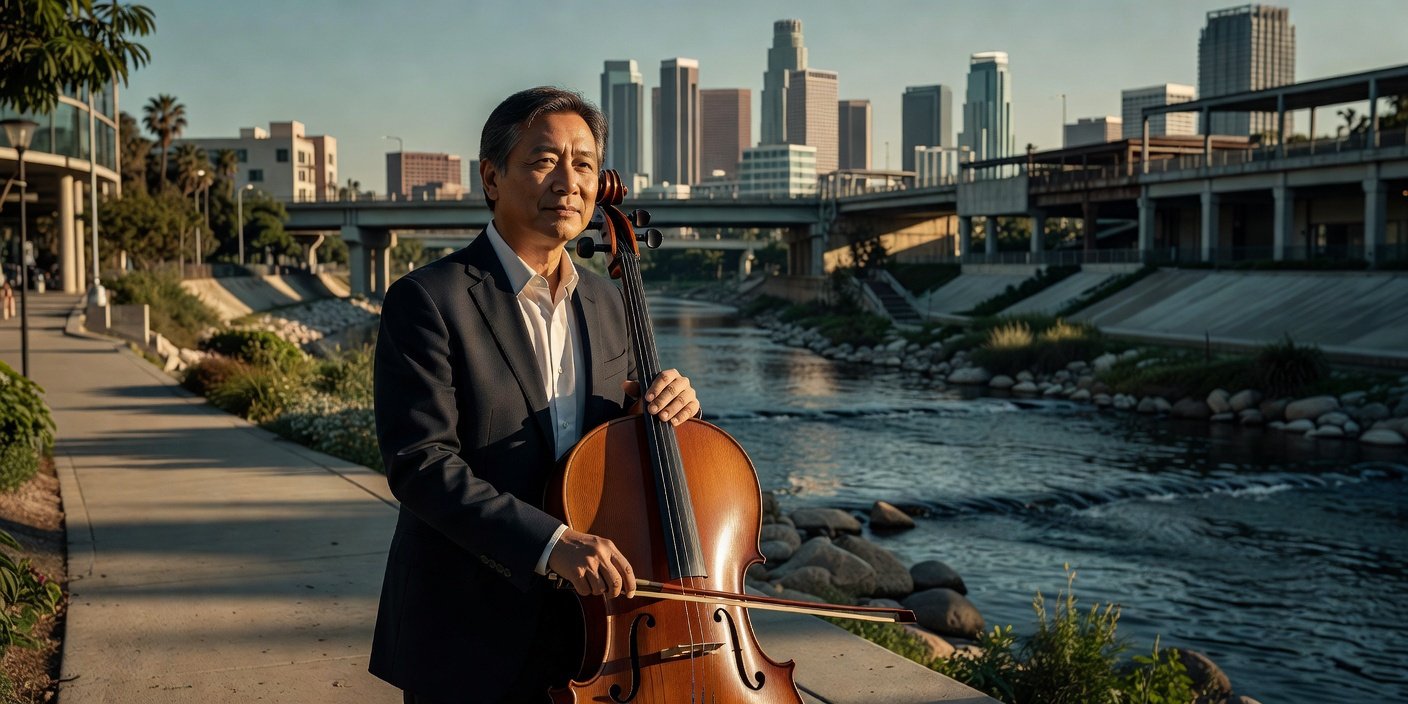
Musicians, led by the internationally acclaimed cellist Yo-Yo Ma, are orchestrating a symphony of events along the Los Angeles River, transforming its banks into stages to spotlight the waterway’s often-overlooked beauty. These performances, ranging from classical music to DJ sets, aim to connect the community with the river’s natural resurgence amidst ongoing revitalization projects.
Key Highlights:
- Yo-Yo Ma performed at Maywood’s Riverfront Park, emphasizing the harmonious relationship between nature and music.
- The trend involves various artists and DJs hosting events along different stretches of the L.A. River.
- While celebrating improvements, concerns about ‘green gentrification’ and potential displacement are being raised.
- The performances aim to showcase the river’s beauty and encourage its appreciation as a natural asset.
- The complex history of the L.A. River, from a concrete channel to a revitalized waterway, underpins these discussions.
L.A. River’s Resurgence: A Cultural and Environmental Awakening
The L.A. River, once a concrete-lined conduit largely ignored by the public, is experiencing a significant cultural and environmental renaissance. Spearheading this movement are a series of musical performances designed to draw attention to its revitalized banks and natural potential. The renowned cellist Yo-Yo Ma’s recent performance at Maywood’s Riverfront Park served as a high-profile anchor for this trend, creating a powerful visual and auditory experience that underscored the connection between artistic expression and the environment. Ma’s performance was not an isolated event; it is part of a broader movement involving numerous artists and DJs who are utilizing various points along the 51-mile river’s corridor to host events, transforming neglected areas into vibrant cultural hubs.
The Melody of Revitalization
The performances are strategically timed to coincide with the L.A. River’s ongoing revitalization efforts, a multi-decade initiative aimed at transforming the once-polluted and utilitarian channel into a more naturalized, accessible, and ecologically sound waterway. These cultural events serve a dual purpose: they celebrate the progress made in restoring the river’s ecological health and aesthetic appeal, while also acting as a catalyst for further community engagement and investment. By bringing artists and audiences to the riverfront, organizers hope to foster a deeper appreciation for this urban natural resource and encourage its integration into the fabric of city life. The choice of venues, such as the public park in Maywood, highlights a commitment to making these revitalized spaces accessible to diverse communities.
Echoes of ‘Green Gentrification’
However, the spotlight on the L.A. River’s beauty and the accompanying revitalization efforts are not without their controversies. The concept of ‘green gentrification’ looms large in discussions surrounding these developments. As previously neglected areas along the river become more attractive and desirable due to greening projects and cultural events, there is a palpable concern that property values will rise, potentially displacing long-term residents and businesses. The complex history of the L.A. River, which includes periods of industrial use and a lack of investment in adjacent communities, makes these concerns particularly acute. Critics argue that while environmental improvements are welcome, they must be implemented equitably, ensuring that the benefits of revitalization are shared broadly and do not exacerbate existing social and economic inequalities.
A Complex Waterway’s Future
The L.A. River is more than just a body of water; it is a complex historical and ecological entity. Its transformation from a natural riverbed to a concrete channel in the mid-20th century was an engineering feat intended to control flooding but resulted in the loss of natural habitat and recreational opportunities. Modern revitalization efforts aim to strike a balance, reintroducing more natural elements while maintaining flood control and enhancing public access. The musical performances serve as a potent reminder of this ongoing evolution, inviting the public to reimagine the river’s potential. As more funding flows into restoration projects and public amenities along its banks, the debate intensifies on how to manage this urban river’s future in a way that is both environmentally sustainable and socially just. The challenge lies in harnessing the positive momentum generated by events like Yo-Yo Ma’s performance to create a river that truly serves all Angelenos, preserving its newfound beauty without erasing the communities that have long been a part of its story.
FAQ: People Also Ask
What is the L.A. River’s history?
The L.A. River has a long and varied history. Originally a natural river, it was channelized into a concrete flood control channel in the mid-20th century to prevent devastating floods. For decades, it was largely viewed as an industrial byproduct, but in recent years, significant efforts have been made to revitalize it, focusing on environmental restoration, park development, and public access.
What is ‘green gentrification’?
‘Green gentrification’ refers to the process where environmental improvements, such as the creation of parks, green spaces, and sustainable infrastructure in urban areas, lead to an increase in property values and rents. This can result in the displacement of lower-income residents and long-term communities who can no longer afford to live in the area.
Who is Yo-Yo Ma and why is he performing at the L.A. River?
Yo-Yo Ma is a world-renowned classical cellist celebrated for his virtuosity and his commitment to using music to bridge divides and promote social good. His performance at the L.A. River is part of a broader initiative to draw attention to the waterway’s beauty and revitalization, aligning with his passion for the intersection of music, nature, and community.
What are the goals of the L.A. River revitalization projects?
The primary goals of the L.A. River revitalization projects include improving water quality, restoring natural habitats, enhancing biodiversity, increasing public access for recreation, creating green spaces, and transforming the river into a valuable community asset. There is also a focus on ensuring that these improvements are equitable and benefit all communities along the river.
What are the main concerns regarding the L.A. River’s revitalization?
The main concerns include the potential for ‘green gentrification’ and displacement of existing communities, ensuring equitable access to the revitalized spaces for all socioeconomic groups, managing the environmental impact of increased human activity, and balancing flood control needs with ecological restoration. Ensuring that the economic benefits of revitalization are shared broadly is also a key consideration.