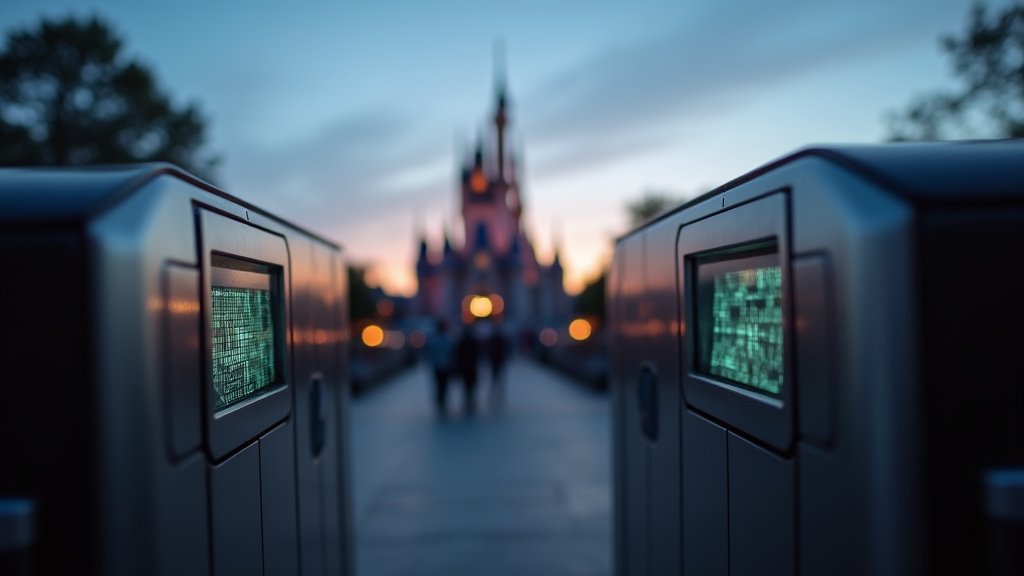
Disneyland has officially initiated the rollout of optional facial recognition technology at the entrances to Disneyland Park and Disney California Adventure, signaling a significant shift in the resort’s operations. As the theme park giant seeks to modernize its entry experience and curb ticket fraud, the introduction of biometric scanning marks the latest step in a broader, industry-wide move toward touchless, identity-based access. While the technology is designed to streamline the notoriously long queue times at the Anaheim resort, it has also sparked immediate discourse regarding data privacy, the normalization of surveillance in public spaces, and the future of consumer convenience versus security. For guests, the change is presented as a high-tech shortcut, yet the availability of traditional, non-biometric lanes remains a critical feature for those wary of the new digital protocol.
Key Highlights
- Optional Participation: The facial recognition system is entirely optional; guests can choose to use designated biometric lanes or traditional, non-scanned lanes.
- Data Lifecycle: Disney states that biometric data is converted into unique numerical values, used for verification, and deleted within 30 days of creation.
- Operational Goals: The initiative aims to reduce wait times at the main gates and prevent illegal ticket sharing or unauthorized entry.
- Alternative Entry: Guests who opt out can use standard lanes where a Cast Member will manually validate tickets and identification.
The Digital Turnstile: Analyzing the Shift to Biometric Entry
The Mechanics of the New System
The implementation of facial recognition at Disneyland is not a wholesale abandonment of traditional entry methods, but rather a strategic expansion of biometric integration. When a guest approaches a designated biometric lane, the process is streamlined to minimize friction. Instead of manually scanning a physical or digital ticket and waiting for a Cast Member to verify the match, the system captures a photo of the guest’s face. This image is immediately processed via biometric algorithms that convert the visual data into a unique, encrypted numerical value. This value is then compared against the biometric profile created during the guest’s initial ticket or annual pass activation. If the values align, the turnstile unlocks, granting entry.
This technology essentially automates the ‘human verification’ step that has been a staple of theme park security for decades—the classic check to ensure that the person holding the ticket is the same person who purchased it. By automating this, Disney aims to reduce the variability of human performance, effectively cutting down seconds per guest. While seconds may seem negligible in isolation, when aggregated across the tens of thousands of visitors that pass through the Esplanade every morning, the cumulative effect can drastically reduce the length of entry queues and improve the ‘first impression’ of the park experience.
Privacy, Security, and Data Retention Policies
For privacy advocates and cautious guests, the primary concern remains the collection and storage of biometric data. Recognizing these sensitivities, Disney has published clear guardrails regarding its data lifecycle. According to the company’s official disclosures, the facial recognition system is designed with specific security protocols. The system captures the image, generates the numerical code, and completes the verification. Crucially, Disney maintains that these generated numerical values are not permanent databases of guest likenesses; rather, they are set to be deleted within 30 days of creation, barring instances where retention is legally required for fraud prevention.
However, the concept of ’30-day deletion’ is viewed through two very different lenses. To the security-minded consumer, it is a reassuring policy that limits the footprint of their sensitive data. To the privacy skeptic, it begs the question of why the data needs to be captured in the first place, or whether such a protocol is robust enough to prevent data breaches or unauthorized access to the biometric infrastructure. The balance between ‘seamless entry’ and ‘data minimization’ remains the central tension in this rollout.
The Psychology of the Opt-Out
One of the most important aspects of this launch is that it is not forced. By maintaining lanes where guests can still interact with a Cast Member for manual validation, Disney is attempting to soften the transition. This ‘opt-out’ architecture is a vital component of public acceptance. It acknowledges that a significant portion of the population remains uncomfortable with the normalization of facial recognition in daily life.
This creates an interesting social dynamic at the park gates. We are likely to see a bifurcation of the entrance experience: the ‘tech-forward’ traveler, prioritizing speed and efficiency, flowing through the biometric lanes, and the ‘privacy-conscious’ visitor, choosing the slower but more traditional manual lanes. This allows Disney to test the adoption rates of the technology. If the biometric lanes prove significantly faster, market pressure and human convenience will likely drive adoption higher, effectively normalizing the technology for future generations of park-goers, similar to how TSA PreCheck or Clear have become standard in airport travel.
Broader Implications for the Themed Entertainment Industry
The move at Disneyland does not exist in a vacuum; it is part of a massive technological shift within the entertainment and travel sectors. From sports stadiums using facial recognition for express entry to airports integrating biometric boarding, the ‘face as a ticket’ paradigm is expanding rapidly.
Disneyland is essentially becoming a bellwether for how large-scale, high-traffic consumer venues will operate in the late 2020s. If the Disneyland implementation is successful—meaning it reduces lines without causing significant backlash or security incidents—it will almost certainly become the industry standard. The economic incentives are simply too high: the reduction of fraud and the increase in throughput directly translate to operational cost savings and improved guest satisfaction metrics. Conversely, if the implementation faces sustained criticism or technical failures, it could provide a cautionary tale for other venue operators currently considering similar upgrades.
A Look at Future Projections
Looking toward the future, the integration of biometrics at Disneyland is likely just the beginning of a broader ‘connected guest’ strategy. We can speculate that, in the coming years, this data could be leveraged for more than just entry. Imagine a world where your facial scan not only unlocks the park turnstile but also allows you to make cashless purchases at food stalls, automatically retrieve your ride photos, or even unlock your hotel room door. The ‘frictionless park’ is the long-term goal of the Disney Experience strategy.
However, this path is fraught with regulatory and social hurdles. As biometric technology advances, governments and regulatory bodies will likely tighten oversight on how private corporations handle such sensitive data. Disney will need to remain transparent and proactive in its communication to maintain public trust. The success of this rollout will depend not just on the software’s speed, but on the company’s ability to prove that its commitment to guest privacy is as strong as its commitment to guest efficiency. For now, the rollout is a measured step, a test of both the technology and the public’s willingness to embrace a new, digital version of the ‘Happiest Place on Earth.’
FAQ: People Also Ask
Is the facial recognition technology at Disneyland mandatory?
No, the facial recognition technology is completely optional. Guests who prefer not to participate can choose to use designated entrance lanes that do not employ biometric scanning. In these lanes, a Cast Member will manually validate your ticket and photo ID as they have done traditionally.
What happens to my biometric data after I am scanned?
Disney has stated that the biometric technology converts the images of your face into unique numerical values. These values are used for verification purposes and, according to Disney’s policy, are deleted within 30 days of their creation, unless there is a specific legal or fraud-prevention requirement to retain them.
How does this technology help with park entry?
The primary goal is to speed up the entry process and prevent ticket fraud. By using biometric verification, Disney can confirm that the person using the ticket is the authorized owner much faster than a human Cast Member can manually check a ticket against a guest’s photo. This is intended to reduce line wait times at the park gates.
Can children participate in the facial recognition lanes?
Yes, but with caveats. Children can generally use the lanes, often with the supervision or permission of an adult guardian. However, for those who are uncomfortable or if there are specific concerns, the opt-out lanes remain available for all guests regardless of age.